
*This article contains an affiliate link*
When children say they want to be influencers
Many parents have heard some version of it: “I want to be a YouTuber”, “I want to make videos”, or “I want to be an influencer when I grow up”. For adults, those statements can bring up mixed feelings. On one hand, it can be lovely to see a child feeling inspired, imaginative and full of ideas. On the other hand, the word “influencer” often comes loaded with concerns about screen time, social media pressure, privacy, online safety and whether children really understand what that world involves. It can be difficult to know whether to encourage the interest, shut it down quickly, or try to find some middle ground.
The reality is that children today are growing up in a world where content creation is everywhere. They watch people filming routines, reviewing products, documenting hobbies, sharing gaming clips, and making short-form videos that turn everyday moments into entertainment. From a child’s perspective, wanting to do the same can feel completely natural. It is often less about chasing fame than adults assume and more about wanting to copy what they see, experiment with ideas, and create something of their own. In many cases, children are not saying they want the pressures of public life or the responsibility of managing an online audience. They are simply expressing an interest in storytelling, filming, editing and being creative in a way that feels modern and relevant to them.
Why parents feel uneasy about the influencer dream
Parental hesitation makes a lot of sense. Once the conversation moves from imaginative play to actual devices and online platforms, the risks become much more real. A child might enjoy the idea of filming videos, though giving them unrestricted access to social media to explore that interest is a very different matter. Open platforms can expose children to inappropriate content, unkind comments, unrealistic comparisons, and a constant sense of needing approval through likes, shares and followers. Even older children can struggle with those pressures, so it is understandable that many parents do not want to throw younger children straight into that environment.
There is also the issue of what children think being an influencer actually means. Many only see the polished end result. They see someone talking confidently to camera, opening parcels, showing their day, or making funny clips, though they do not necessarily see the editing, planning, retakes, criticism, privacy concerns or mental load behind it. As a result, what they often want is not the full reality of influencing at all. They usually want the fun and expressive part of making content. That distinction matters, as it opens the door to a much healthier response. Rather than reacting only to the label “influencer”, it can help to focus on the skills and interests underneath it.
What children may actually be interested in
When a child says they want to become a content creator, they may really be showing an interest in a range of useful and creative activities. They might love the idea of taking photos, recording short clips, narrating what they are doing, making mini films, or documenting everyday life in a playful way. Some children enjoy performing and speaking to camera. Others are more drawn to the behind-the-scenes side, such as framing shots, noticing details, adding effects, or putting together short edits. For some, it is a form of storytelling. For others, it is about creativity, humour, self-expression or simply copying what feels current and exciting.
Seen from that angle, content creation does not have to be dismissed as a shallow ambition. It can actually help children build confidence, communication skills and digital literacy in a very practical way. Learning how to frame an image, tell a story clearly, speak with confidence, or think about what makes something interesting to watch are all valuable skills. In the future, those abilities could support everything from school presentations to creative projects and even career interests in media, marketing, design, photography or entrepreneurship. The important thing is not to rush children into the most public and high-pressure version of content creation before they are ready.
A safer way to let children try content creation
This is where child-friendly creative tech can be incredibly useful. Rather than handing over a smartphone and opening the door to social media, there is a safer and far more age-appropriate option: giving children a device that lets them explore photography and video-making in a contained, creative way. That allows parents to support the interest without immediately exposing children to the wider online world. It also gives children the chance to find out whether they genuinely enjoy making content, rather than just liking the idea of online attention.
One option that fits this approach is the myFirst Camera 50. For parents who are trying to respond thoughtfully when their child says they want to be a YouTuber or influencer, this kind of device offers a sensible middle ground. It gives children a way to experiment with video and photography using something designed for their age group, rather than relying on adult devices that come bundled with distractions, risks and far more access than most families want to allow.
Why a child-friendly camera makes more sense than a phone
One of the biggest advantages of a dedicated child-friendly camera is that it shifts the focus back to creativity. A smartphone tends to come with everything else attached: messaging, endless scrolling, adverts, notifications, and easy access to platforms that are designed to hold attention for as long as possible. For a child who says they want to create content, that can blur the line between making things and passively consuming everything around them. A camera built for children creates a very different starting point. It says, in effect, “Let’s explore taking photos and making videos first.”
That can be a much healthier introduction. Children get the excitement of capturing moments, trying out ideas, and experimenting with how they want to present things, though without being pulled straight into the comparison culture that often comes with online platforms. They can film a toy review, make a silly clip with siblings, document a day out, or create mini stories at home. Those experiences help them understand whether they actually enjoy the creative process itself. That is important, as plenty of children love the thought of being seen online, though are much less interested once they realise good content usually takes time, patience and imagination.
A safe way to test whether they really enjoy making content
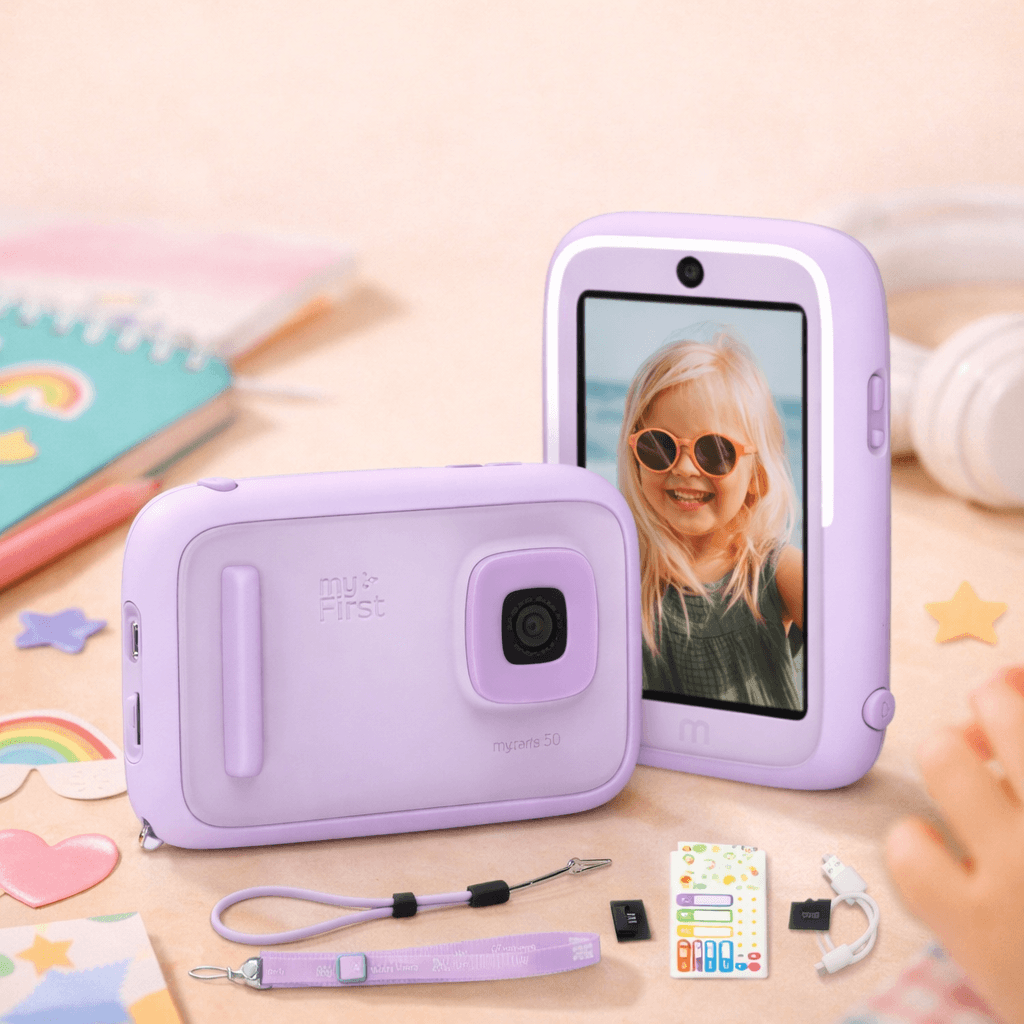
One of the most useful things about starting with something like the myFirst Camera 50 is that it helps parents separate interest from fantasy. Children often latch onto the idea of being influencers because it looks exciting, visible and glamorous. What they may not know yet is whether they enjoy planning content, reshooting videos, thinking of ideas, reviewing what they have made, and trying again when something does not work. A child-friendly camera offers a low-pressure way to explore all of that without the emotional intensity of public feedback.
This matters because there is huge value in children learning the process before ever thinking about an audience. If they discover that they love making little films, capturing funny family moments, or creating visual stories, then parents have learned something meaningful about their interests. If they lose enthusiasm after a week, that tells you something too. Either outcome is helpful. It means families can respond to what the child actually enjoys, rather than reacting only to a trendy job title or social media-inspired dream. In that sense, a device like this is not just a gadget. It can be a useful way of observing interests, supporting creativity and opening better conversations about digital life.
What parents can do alongside the tech
Technology on its own is never the whole answer. What makes the biggest difference is how parents frame the experience. Children benefit most when content creation is treated as something creative and thoughtful, rather than something tied to popularity. Talking about stories, ideas, imagination and effort helps children place the emphasis in the right place. Asking questions like “What do you want to make?”, “What is your video about?” or “What would make that fun to watch?” encourages them to think like creators rather than performers seeking approval.
It is also a good opportunity to introduce early digital values in a calm, age-appropriate way. Parents can start conversations about privacy, what should stay offline, how to film respectfully, and why not everything has to be shared publicly. Those lessons are far easier to teach before children are actively using social platforms. A safe starting point gives families room to build strong habits first. That slow introduction often leads to much healthier choices later on, especially as children get older and become more curious about wider online spaces.
Content creation is not the problem – unsafe starting points are
It is easy to panic when children say they want to grow up to be influencers, though the ambition itself is not necessarily the issue. In many cases, what sits underneath that statement is curiosity, creativity and a desire to express themselves in a format that feels natural to their generation. Shutting that down completely can miss the opportunity to nurture genuine skills and interests. Throwing them straight onto social media can create problems they are not ready to handle. The sweet spot often lies somewhere in between.
That is why a product like the myFirst Camera 50 can make so much sense for families. It offers children a chance to explore what they mean when they say they want to be content creators, while giving parents a safer, more controlled way to support that interest. Instead of making the conversation about fame, followers or internet pressure, it brings the focus back to creativity, learning and fun. For many families, that feels like a much better place to begin.
Final thoughts
When a child says they want to be an influencer, it doesn’t have to trigger an immediate battle or a flat refusal. It can be the start of a more useful conversation about what they enjoy, what they are curious about, and how they can explore those interests safely. There is a big difference between wanting to make videos and being ready for social media. Recognising that difference helps parents respond with more confidence and less fear.
A child-friendly camera can be a practical first step that allows children to try filming, storytelling and visual creativity without all the noise and risk of open online platforms. That makes it easier to support their interests while keeping the experience age-appropriate. For parents looking for a safe way to test whether a child genuinely enjoys making content, this could be a very sensible place to start.
