
There is something rather frustrating about the way sustainable living is sometimes presented. Scroll through social media and you could easily believe that becoming more environmentally conscious requires a beautifully organised home, an unlimited budget, endless spare time and an impressive collection of matching glass jars. For most families, however, everyday life looks rather different, with washing machines running almost constantly, children needing clean uniforms at inconvenient moments, overflowing recycling bins and the never-ending challenge of keeping everyone fed, organised and vaguely on schedule.
While many parents would genuinely like to make more environmentally responsible choices, the reality is that convenience, affordability and practicality have to come into the equation. An alternative might look wonderful on paper, but if it costs considerably more, creates extra work or simply doesn’t perform as well as the product it replaces, it’s unlikely to become a permanent feature of family life.
This is where the idea of easy eco-friendly swaps becomes particularly appealing. Rather than attempting to transform an entire household overnight, there is considerable value in looking at the products we use most frequently and considering whether there might be a more sustainable way of doing exactly what we’re already doing.
The most encouraging part is that some of these changes can actually make household routines easier, rather than adding another responsibility to an already demanding day.
Why sustainable living needs to work for real families
One of the biggest barriers to adopting more sustainable habits is the perception that every environmentally friendly decision requires some kind of sacrifice. Whether that’s paying a premium for alternative products, travelling further to find packaging-free shops or spending additional time preparing things that could otherwise be bought ready-made, the cumulative effect can make greener living feel unnecessarily complicated.
There is also a tendency to focus on the most visible aspects of sustainability, such as reusable shopping bags and water bottles, while overlooking the ordinary household purchases that quietly accumulate over the course of a year.
Consider the number of bottles of laundry detergent, cleaning sprays, fabric conditioners and washing-up products a family might get through, particularly in a household with several children. Individually, these purchases might seem insignificant, yet they represent a considerable amount of packaging, transportation and consumption when repeated week after week.
Finding alternatives that reduce some of this waste without fundamentally changing the way a household operates is a much more achievable starting point than trying to adopt an entirely new lifestyle.
Start with the household routines that never seem to end
If there is one household task that perfectly illustrates the realities of family life, it has to be laundry. Just when the washing basket appears to be under control, another collection of school uniforms, sports kits, towels and bedding materialises, often accompanied by clothes that have apparently been worn for approximately seven minutes before being declared dirty.
In larger families, laundry can become an almost continuous process, which makes it an interesting place to consider more sustainable alternatives. Even a relatively small adjustment to something used several times a week has the potential to become a meaningful long-term change.
Traditional laundry detergents have their advantages, but large plastic bottles can be awkward to store, heavy to carry and surprisingly messy, particularly when children start taking responsibility for their own washing. Liquid detergents can also encourage overpouring, while the amount of packaging involved in repeatedly purchasing new bottles is worth considering.
One alternative that has become increasingly accessible is concentrated laundry detergent sheets, which offer a different approach to an everyday household essential.
A simpler approach to laundry with The Green Co.
The Green Co. is an independent Scottish company based in Dundee, offering household cleaning products designed to reduce unnecessary packaging and make more sustainable choices convenient for everyday use.
Its GreenSheets laundry detergent sheets are a particularly interesting example of how an ordinary household product can be redesigned without requiring families to change their established routines.
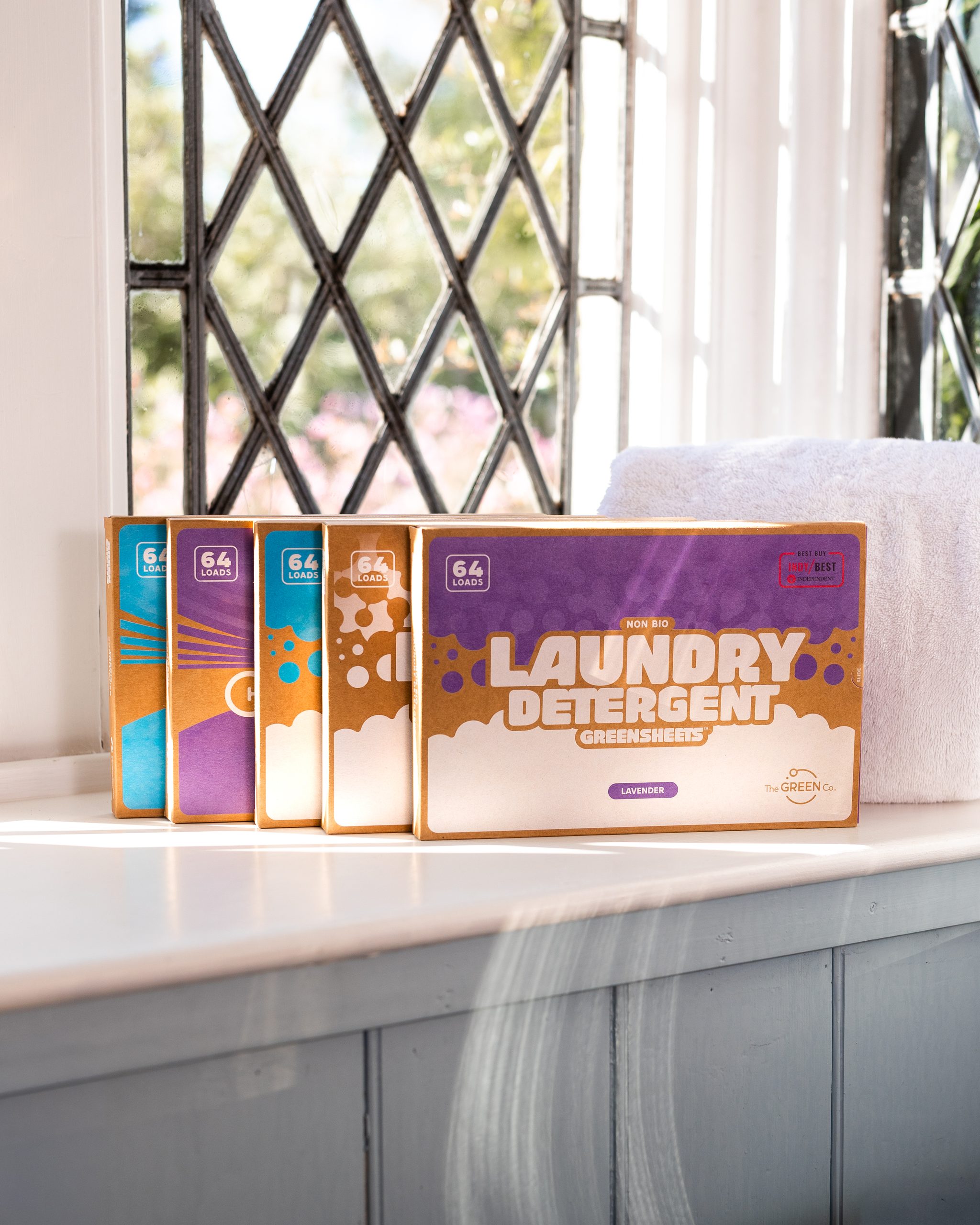
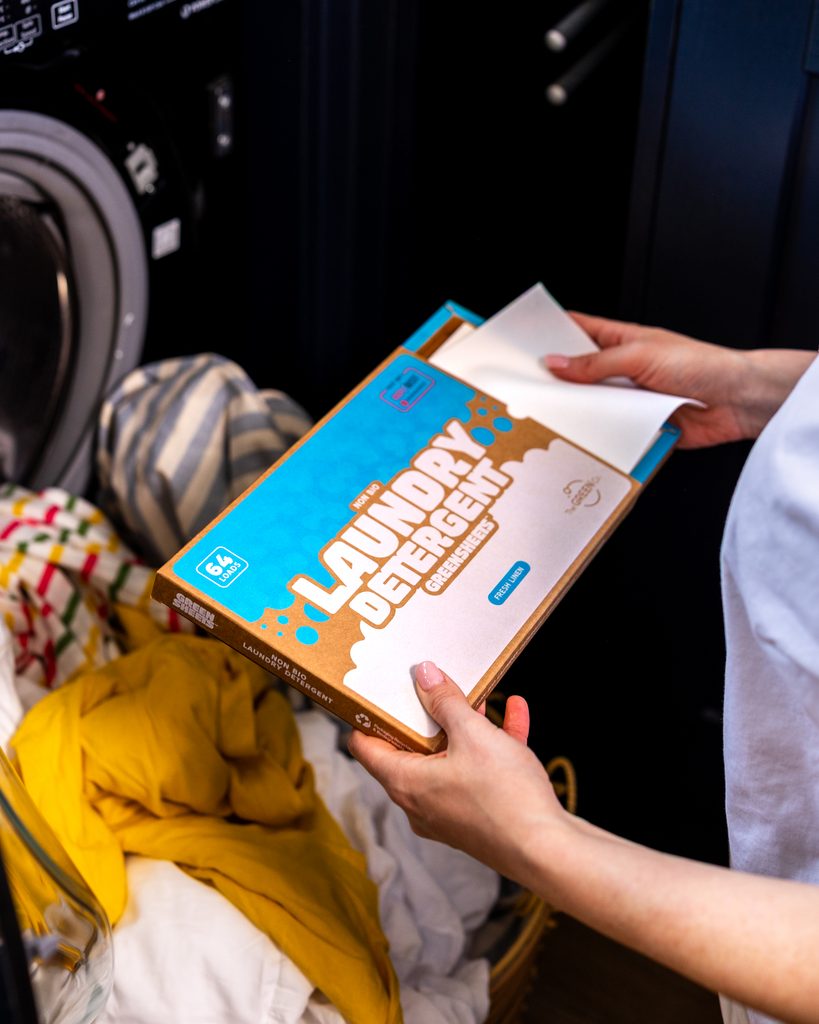
Rather than using a conventional liquid or powder detergent, GreenSheets are lightweight, concentrated sheets that dissolve in the washing machine. According to the company, one sheet is generally sufficient for a wash, eliminating the need to measure out detergent while removing the bulky plastic bottle associated with many conventional alternatives.
For households where cupboard space is limited, the difference in storage requirements is immediately appealing. A compact box of detergent sheets is considerably easier to accommodate than several large bottles, particularly when laundry products are stored in a kitchen cupboard rather than a dedicated utility room.
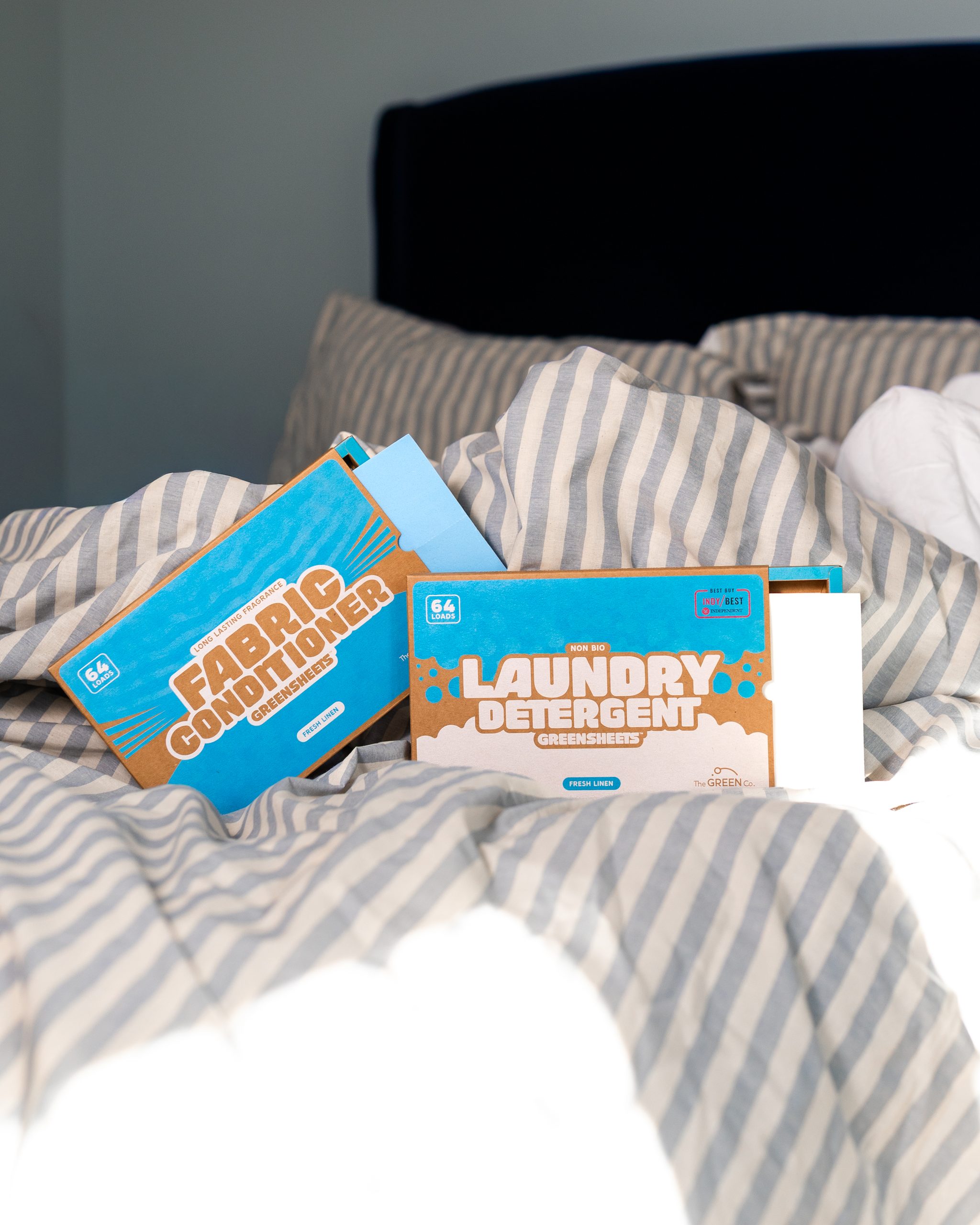
The company packages its sheets in plastic-free, compostable boxes and offers fragrance-free, Fresh Linen and Lavender varieties, all in non-bio formulations. The sheets are also described as vegan and cruelty-free, with the company stating that they are suitable for different washing temperatures and machine cycles.
From a practical family perspective, the simplicity is probably one of the biggest attractions. There is no measuring, no detergent dripping down the side of a bottle and no need to find somewhere to store another large container. The sheets are also lightweight enough to take on holiday, making them useful for families staying in self-catering accommodation or travelling for extended periods. This aspect I absolutely love.
The Green Co. offers a four-load sample pack, which is a sensible option for anyone reluctant to commit to a completely unfamiliar product. Trying an alternative before buying a larger quantity also helps avoid the waste associated with purchasing products that ultimately don’t suit a household’s needs.
For families interested in reducing plastic packaging without introducing additional complications into the laundry routine, The Green Co.’s GreenSheets are certainly worth exploring.
Rethinking the cleaning cupboard
Laundry isn’t the only area of the home where packaging can accumulate surprisingly quickly. Many households have a collection of cleaning sprays, surface cleaners, bathroom products and specialist solutions, each packaged in its own container and frequently replaced when empty.
While different cleaning tasks sometimes require specific products, it is worth considering how many separate bottles are genuinely necessary and whether some could be replaced with refillable alternatives.
Concentrated cleaning products are becoming increasingly popular because they reduce the need to transport and store large quantities of water. Instead of purchasing another ready-mixed spray every time a bottle runs out, some systems allow households to refill an existing container using a concentrated tablet dissolved in water.
The Green Co. has extended this concept beyond laundry through its GreenTabs cleaning products, which include dissolvable cleaning spray refills and hand soap alternatives. These products follow a similar principle to the laundry sheets, focusing on compact formats that reduce reliance on conventional single-use packaging.
For busy families, the appeal lies in being able to maintain familiar cleaning routines while reducing the number of bottles being purchased and discarded. A refillable spray bottle can remain in the cupboard, ready to be replenished when needed, rather than being replaced entirely.
There is also value in becoming more flexible with ingredients. Vegetables that are beginning to lose their freshness might still be suitable for soups, curries or sauces, while leftover cooked ingredients can sometimes form the basis of another meal, provided they have been stored safely.
How to decide whether a green swap is actually worthwhile
With so many products now promoted as sustainable, biodegradable, natural or environmentally friendly, it can be difficult to determine which alternatives offer genuine advantages.
Packaging is one consideration, but it isn’t the only factor that matters. Product performance, durability, ingredients, manufacturing processes, transportation and disposal can all contribute to the overall environmental impact of a purchase.
For example, replacing a conventional detergent bottle with a plastic-free box reduces one obvious source of packaging, although it doesn’t automatically establish that the product has a lower environmental footprint in every respect. Equally, a concentrated product may offer advantages in terms of storage and transportation, but it still needs to perform effectively and be used correctly.
This doesn’t mean families need to undertake extensive research every time they buy washing detergent or cleaning products. It simply means approaching environmental claims with a little curiosity rather than assuming that every product described as green is necessarily the best option.
Cost matters too, particularly for larger households where everyday essentials are purchased frequently. Comparing the price per wash or per use provides a more meaningful indication of value than comparing packaging sizes or initial purchase prices.
Trying smaller quantities before committing to a new product, checking whether refills are readily available and considering how easily an alternative fits into existing routines can all help families make sensible decisions.
Ultimately, a sustainable swap is far more likely to become a lasting habit when it combines reasonable value, reliable performance and genuine convenience.
A greener family home starts with realistic choices
The most useful way to approach sustainable living is probably to stop thinking of it as a major household transformation and start seeing it as a series of ordinary purchasing decisions.
Families already make countless choices about the products they use, the food they buy, how they travel and how they manage their homes. Considering the environmental implications of some of those decisions doesn’t have to involve dramatic changes or additional pressure.
There may be opportunities to reduce packaging by switching to products such as The Green Co.’s laundry detergent sheets, to cut down on disposable cleaning bottles through refill systems or to reduce energy consumption by making small adjustments to laundry habits. Elsewhere, simply using existing possessions for longer, avoiding unnecessary purchases and wasting less food can be equally worthwhile.
What makes these changes appealing is that they can be introduced gradually, without expecting everyone in the household to adopt an entirely different way of living.
Sustainability should be something that families can work towards within the realities of their own budgets, homes and routines, rather than another standard against which busy parents feel they are being judged.
For anyone wondering where to begin, the answer may be as straightforward as looking at the next household essential that needs replacing and asking whether there is a practical alternative worth trying. Over time, those individual decisions can become familiar habits, helping to create a home that produces less unnecessary waste without making everyday family life any more complicated.
