
There are no flooring materials that will be perfectly safe for your kids, pets, and the entire house. A floor that will survive the Labrador in the mudroom will not look good in the toddler’s bedroom. You need to understand the limitations of the materials and what they can handle. Most importantly, remember that the best type of flooring depends on where it will face the heaviest use.
Luxury vinyl plank: the safest option for most rooms
Luxury vinyl plank is the safest option for most of your rooms. Modern LVP usually has a rigid core (WPC) that is resistant to dents and does not flex like older, more brittle vinyl. The waterproof core will protect the floor from spills and pet accidents.
The most critical characteristic in residential buildings is the thickness of the wear layer, which should be at least 12 mil. If you have pets that scratch the floor, you need to choose the LVP with a 20+ mil layer. Such an LVP is not as beautiful as wood, but it is the best option for a family with kids and pets because it will survive frequent use.
Porcelain tile is better than ceramic in wet areas
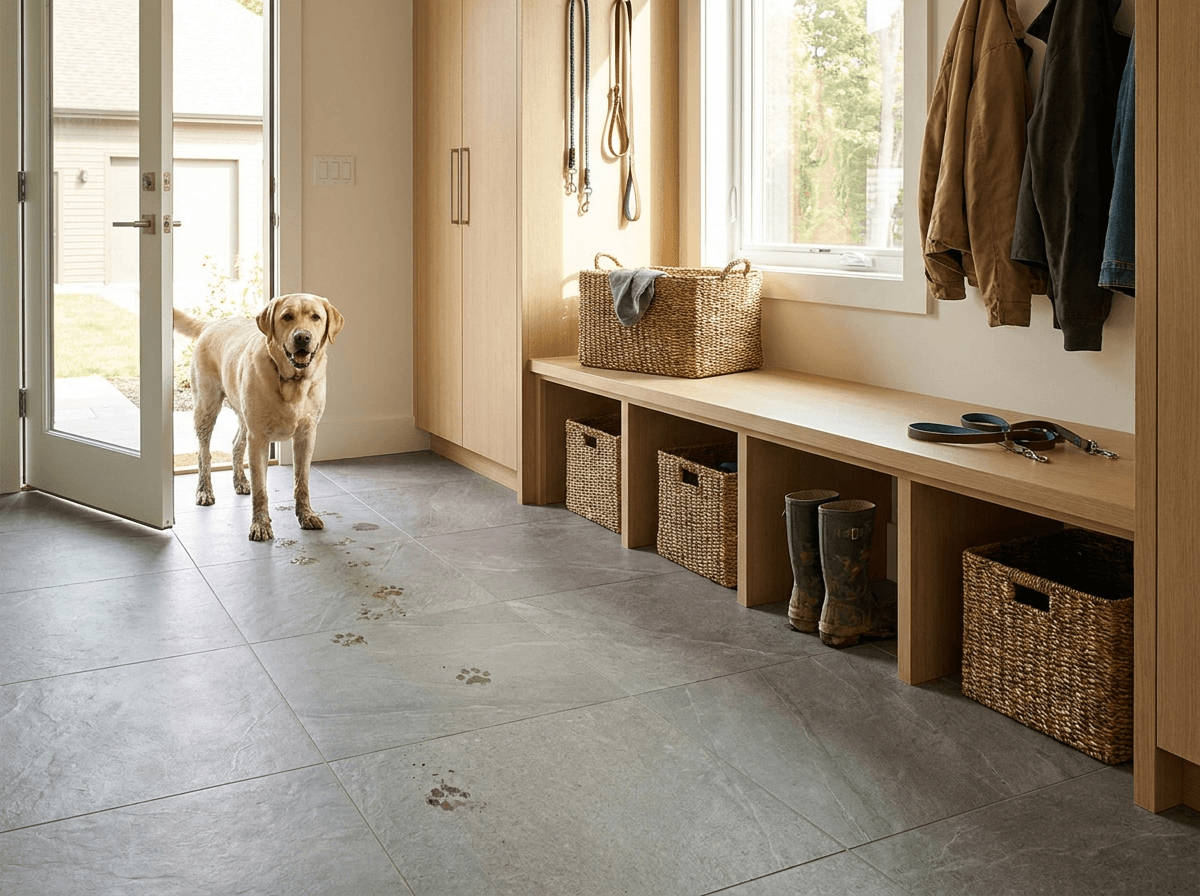
Tile is the best option for entryways, mudrooms, and kitchens. Ask the salesperson to recommend porcelain tiles: they are more dense and less absorbent than ceramic ones. Porcelain is more resilient to impact, while ceramic is more prone to cracking and chipping.
However, tiles’ weakest point is the grout. Regular grout is fragile and stains easily, and once it loses its white color, it becomes almost impossible to clean. Ask for rectified, textured porcelain tiles with epoxy grout. The rectified tiles have square edges and leave less space between them, while the epoxy grout is more resistant to staining. You will not need to reseal the epoxy, while regular grout requires annual maintenance. If you fail to care for the grout, you will spend more time and effort trying to make the floor clean than you would have with other materials.
Engineered hardwood is a safe choice for wood lovers
Solid hardwood is a beautiful material, but it is highly susceptible to atmospheric changes and pet accidents. It is also challenging to maintain, as it tends to warp and crack under high humidity. Fortunately, there is engineered hardwood, which is a multilayer construction with a top layer of real wood. It is more resistant to temperature and humidity changes than solid hardwood.
Nevertheless, it is still wood, which means that pet accidents will permanently damage the floor. It is also important to note that scratches from pets’ nails will mar the surface, especially with large animals. You should protect the floor from furniture by using felt pads on the furniture’s legs.
Laminate is not fit for wet areas
Laminate is often considered a cheap option, but it is a great material for your home. It has an aluminum oxide wear layer that resists scratches and stains. Laminate is a great choice for bedrooms and offices because it is durable, easy to maintain, and has a beautiful appearance.
However, it is not suitable for bathrooms and kitchens because water will permanently damage it. The core of the laminate is made of wood fibers, which will swell and disintegrate if the liquid gets on it. It will be impossible to sand or plane the damaged area, as it will be uneven with the rest of the floor. This characteristic makes laminate incompatible with pets’ water bowls. It is a great material, but only for the right room.
Strand-woven bamboo is harder than hardwood but shows scratches
Bamboo is an eco-friendly alternative to hardwood. Strand-woven bamboo, in particular, is one of the densest materials available. According to the Janka hardness scale, it often rivals red oak and other domestic hardwoods. It is also more affordable than many hardwoods.
However, the surface of strand-woven bamboo often shows scratches, which is a significant downside. The same Janka test shows that traditional hardwoods are more resistant to scratches and have a smoother surface. If the floor looks perfect to you and you want it to look the same ten years later, these imperfections will be a deal-breaker. However, if you want the hardest surface available at an affordable price and do not mind some scratches, this option is ideal for you.
Cork is soft and forgiving but can be dented
Cork is a great material for a playroom or a home gym. It has excellent cushioning properties that will help your child if they fall on the floor. It also absorbs sound, making it a great choice for a quiet home. It is a rare option on the list, as most of the materials are either hard and scratchy or give under pressure.
Cork has several weaknesses, the most prominent of which is its softness. It is best suited for small areas with light traffic, such as a child’s playroom. You may also want to consider installing it in your upstairs home gym, as exercising on a forgiving surface will be comfortable for your joints. Another downside of cork is that it can be marked by pet nails.
Natural stone is indestructible but needs sealing
Granite and quartzite are some of the toughest materials available. They will survive high traffic, dropped pots and pans, and even pets’ claws. They also look great and are available in different colors and patterns. However, it is essential to remember that natural stone is more absorbent than many other materials. Water and other liquids will permanently stain it if they get on the surface. It is necessary to seal natural stone at least once a year to make sure that nothing permanently damages it. If you forget about the annual maintenance, you will see etched and stained spots on your floor.
Once you have narrowed down the list of materials, it is time to visit the store and inspect the samples. The Wylie Carpet & Tile showroom has many options for you to see and feel. Ask the salesperson about additional treatments and always remember to ask hard questions. You should also visit the showroom more than once, as some materials look good in the store but are difficult to maintain.
The best type of flooring depends on the room
The guides to the best type of flooring rarely mention this fact, but there is no one material that will be perfect for every room. If you try to find such a material, you will inevitably be disappointed. Remember that different areas of your home have different needs, and the flooring should be different as well. Some of the most common situations include high-traffic areas, cooking and eating, lighter traffic in the bedrooms, playrooms, and basements.
The entryways and mudrooms are the areas that see the heaviest traffic. Only porcelain tile or LVP with a heavy wear layer can survive the constant flow of people and the mess that comes with them. Do not try to use laminate or cork in these places, as they will be permanently damaged.
Kitchens are the heart of the home, where food is prepared and eaten. The best materials for kitchens are porcelain tiles and LVP, as they can survive spills and have minimal seams. You can also use engineered hardwood, but you have to be very careful not to let any liquid ruin the surface.
Bedrooms are usually subjected to light traffic and are more forgiving in terms of materials. You can use almost anything in the bedroom, including laminate, bamboo, or even carpet, as long as it has a good pad underneath.
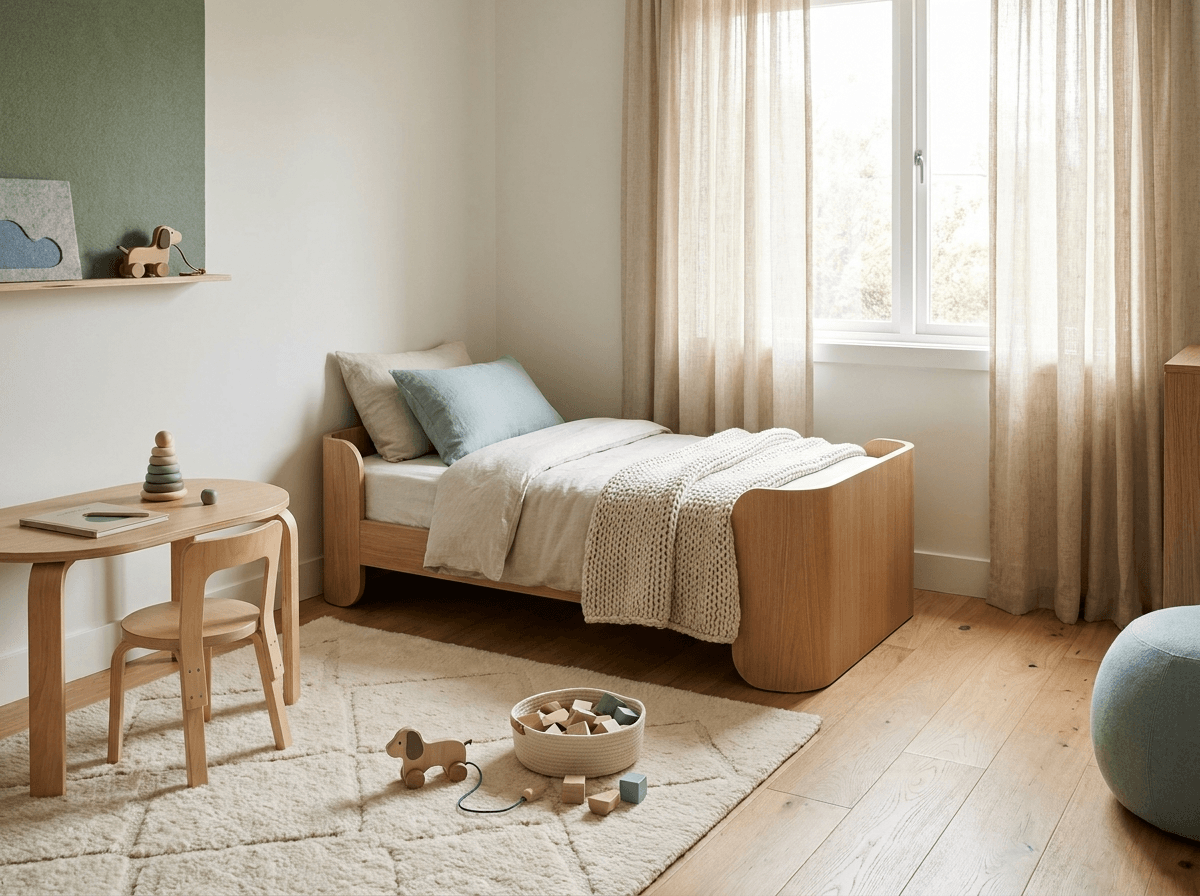
Playrooms and basements are two of the most demanding areas in terms of flooring. In the playroom, you may want to use cork or a good LVP with a thick wear layer. In the basement, it is essential to use a vapor barrier and proper moisture protection when installing any type of floor.
It is also worth mentioning that area rugs and pads are some of the cheapest ways to prolong the life of your floor. They will cushion the surface and reduce the chances of damage. Rugs are also a good option if you want to place them in the high-traffic hallway on top of LVP. The pad underneath the rug will help reduce the impact.
The importance of installation
Poor preparation of the subfloor is the reason why many floors end up ruined prematurely. An uneven subfloor will cause LVP planks to flex and make annoying clicking sounds, tiles to crack, and hardwood to develop gaps that should only appear after a decade. The right type of underlayment also affects the longevity of the floor. It is the primary factor in reducing the impact in multi-story buildings and the main defense against moisture in the case of basements. These details may not be beautiful, but they will significantly affect the lifespan of the floor. It is also essential to choose an experienced installer who will test the subfloor and prepare it accordingly. Paying more money to an expert who will take the time and effort to install the floor is much better than trying to save several hundred dollars and regretting it later.
Summary
The best type of flooring rarely has a clear answer, as different materials have their strengths and weaknesses. You need to choose the material based on the area and its traffic, as well as the quality of installation. Taking these factors into consideration will help you pick the best option that will survive pets and kids for many years.

7 comments
I’m saving this room-by-room advice for our renovation; I used MoScribe’s video-to-text tool to compare flooring samples more easily.
Thank you for sharing this perspective on “7 Durable Flooring Options for Homes with Kids and Pets – Mummy Fever”. Very well structured and helpful. As an additional helpful reference for everyone following this topic, feel free to take a look at spinking.
Choosing the right flooring for a busy home means looking for materials that are durable, easy to clean and resistant to everyday wear. Popular options include luxury vinyl, tile, laminate, hardwood, cork, concrete and engineered wood. Each material offers different benefits in terms of comfort, maintenance and appearance. The best choice depends on your family’s lifestyle, budget and the amount of traffic the floor receives. For more home and lifestyle ideas, explore winztercasino.
Luxury vinyl plank sounds like the most practical option for a busy family home, especially with kids and pets around. The point about choosing a thicker wear layer for pets is useful too. I usually read home and lifestyle articles like this during breaks from Casual Parlor.
While it’s true that LVP has traditionally been seen as less beautiful than wood, I’ve noticed a significant leap in the aesthetic quality of modern luxury vinyl plank designs. Many contemporary LVP options now offer incredibly realistic textures and varied patterns, which can be a real game-changer for families prioritizing both style and durability town of salem.
The room-by-room approach is a useful reminder that flooring needs to match how each space is actually used; I especially liked the warning that laminate can handle bedrooms well but isn’t suitable for wet areas. It also makes sense to consider installation and subfloor preparation, since even a durable material can fail when installed poorly. For readers interested in how financial success is discussed around musicians, trippie redd net worth offers a related topic to explore.
Such a lively and engaging post about 7 Durable Flooring Options for Homes with Kids and Pets! The kinetic flow, motion ideas, and creative perspective shared here are truly wonderful.