
Sometimes the simplest tools can make the biggest difference to everyday life. From keeping on top of family routines to encouraging children’s creativity, printable planners and activities offer practical, flexible solutions without the need for another app or expensive equipment.
Modern family life involves an enormous amount of planning, organising and remembering. There are school commitments, work deadlines, appointments, household jobs, meals to prepare, hobbies to accommodate and family activities to arrange. Even when everything is running relatively smoothly, keeping track of it all can feel like a full-time job.
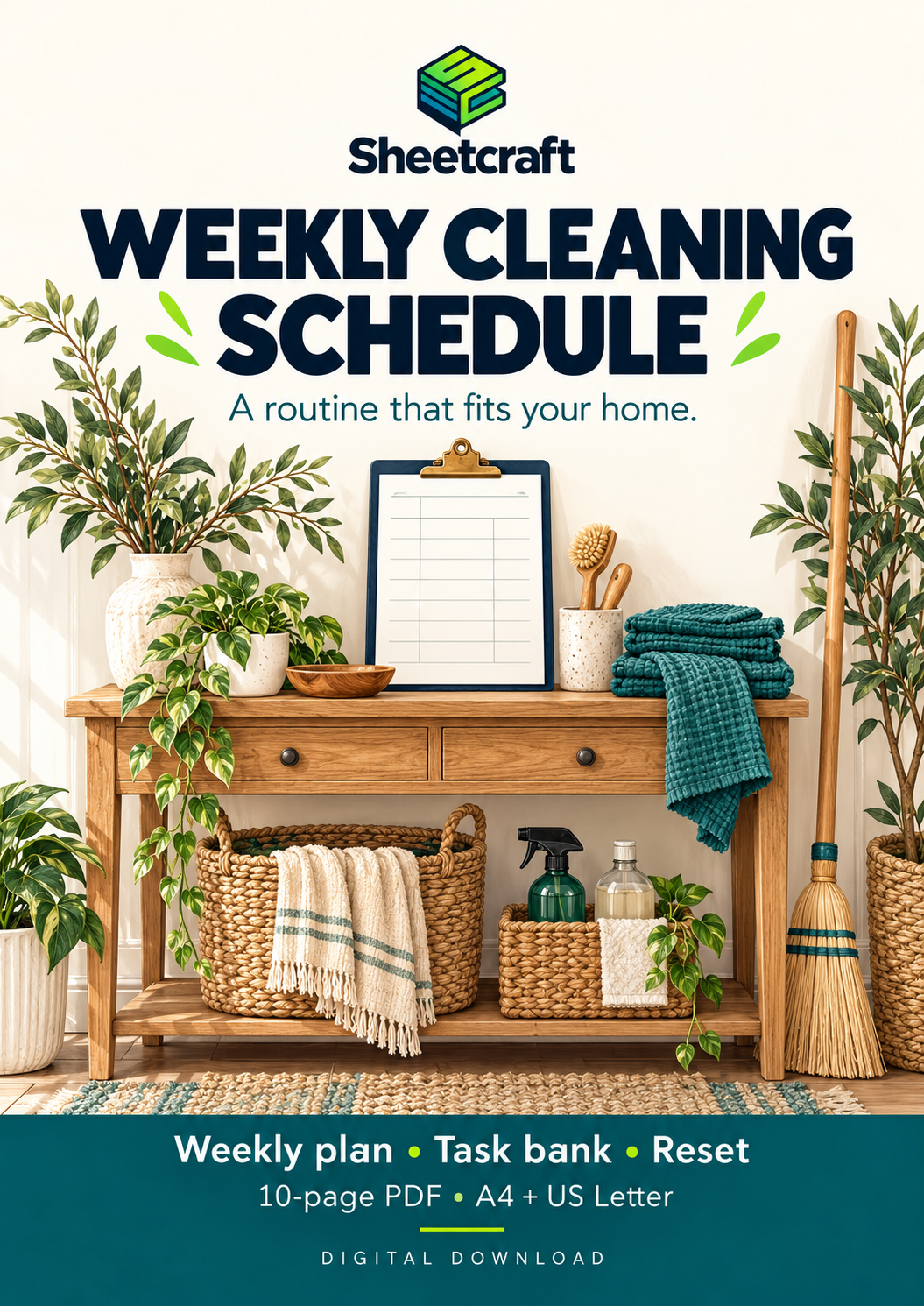
Digital calendars and smartphone apps certainly have their place, although sometimes there is something refreshingly straightforward about putting pen to paper. My husband hates the fact that I won’t convert to a calendar app on my phone, BUT I just really like to see it all physically written down on the wall at home.
This is where printable planners and activities can be surprisingly useful. Rather than investing in expensive stationery, buying multiple notebooks or downloading yet another app, printable PDF resources allow families and individuals to choose exactly what they need, download it and start using it.
One online collection worth exploring is Sheetcraft, which offers downloadable PDF resources covering everything from family organisation and children’s activities to learning, fitness, creativity, travel and business planning.
The beauty of this approach is its flexibility. Different people need different things, and those needs often change throughout the year.
Affiliate disclosure: This article contains affiliate links and a discount code. Mummy Fever may earn a commission on qualifying purchases, at no additional cost to you.
Why printable planners and activities are worth considering
There is no shortage of digital organisation tools available, yet paper-based resources continue to appeal to people of all ages. One reason is simplicity. A printable sheet doesn’t require notifications, passwords, subscriptions or learning how to navigate complicated software.
It can be pinned to the fridge, placed in a folder, kept on a desk or used alongside an existing diary. For families trying to reduce unnecessary screen time, printable resources also provide an opportunity to complete certain tasks away from devices.
There are several practical advantages:
- Flexibility: Choose resources for a particular task rather than committing to an entire planner.
- Convenience: Download a PDF when it is needed instead of waiting for a physical product to arrive.
- Personalisation: Build a collection of resources that suits individual routines, interests and priorities.
- Potential savings: Avoid buying larger planners containing sections that may never be used.
- Reusability: Some PDFs can be printed again for personal use, subject to the product’s licence.
- Visibility: Display important plans somewhere everyone in the household can see them (my favourite).
Printable resources are not necessarily better than digital alternatives. Their value comes from being another option, particularly for people who prefer writing things down or benefit from having information physically visible.
1. Helping busy parents manage the mental load
For many parents, the challenge isn’t necessarily completing individual tasks. It’s remembering everything that needs doing in the first place. School events, shopping lists, packed lunches, clubs, appointments, birthday presents and household responsibilities can quickly become overwhelming.
Printable household planners can help bring some of this information together. Sheetcraft’s Home & Everyday Life collection includes resources such as meal planners, recipe pages and cleaning checklists.
A weekly meal planner, for example, can help families decide what to cook in advance, identify ingredients they already have and create a more focused shopping list.
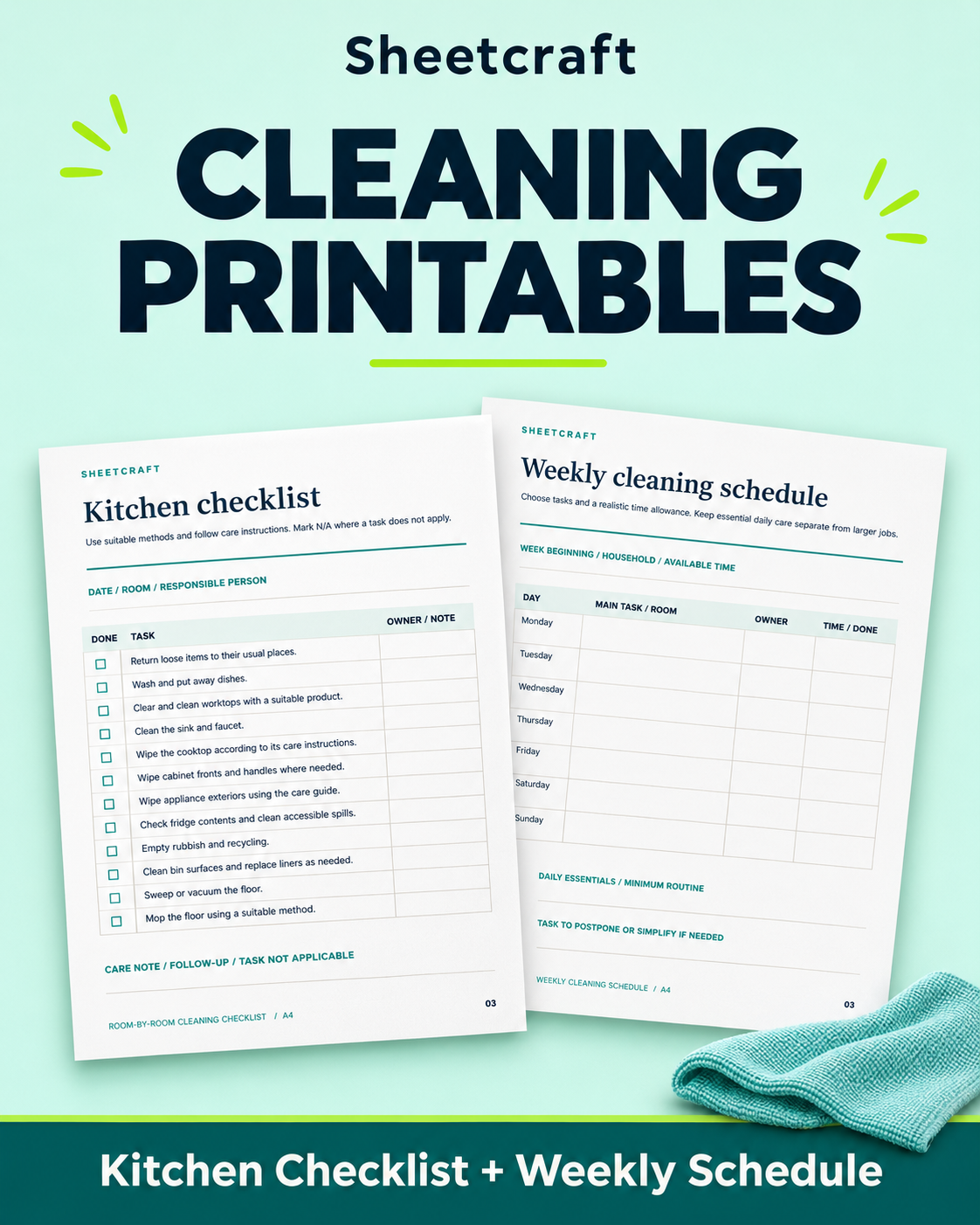
Cleaning checklists can also make household responsibilities easier to divide between family members, rather than leaving one person responsible for remembering everything. The key is to keep these systems realistic. A planner should make life easier, not become another task that needs managing.
2. Encouraging children’s creativity without relying on screens
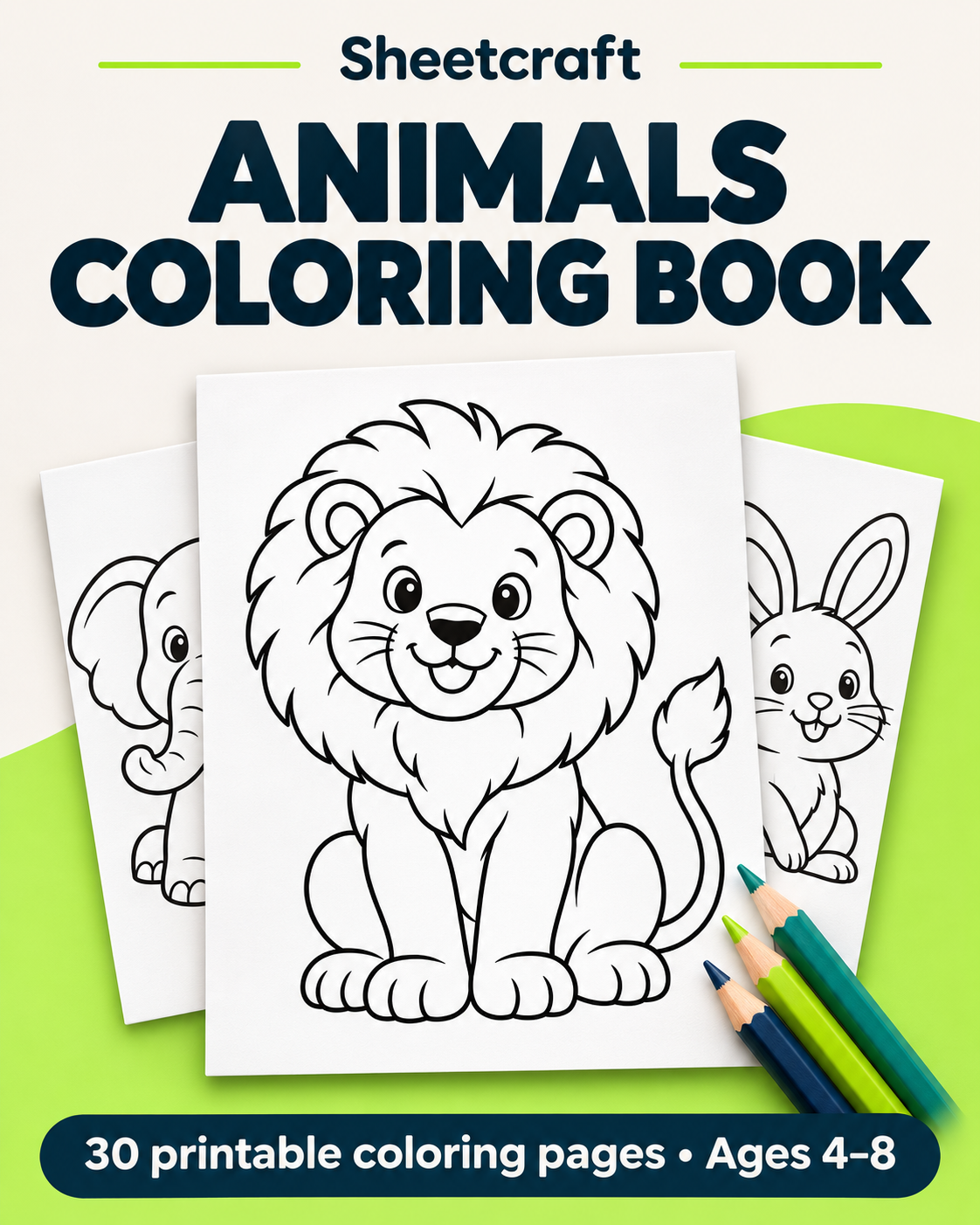
Finding activities that children genuinely enjoy can be challenging, particularly during weekends, school holidays and rainy afternoons. Printable activities offer an accessible way to introduce something different without organising an elaborate project.
Sheetcraft has a Kids, Baby & Parenting collection featuring colouring books and activity pages, alongside an Arts, Crafts & Creativity collection with creative workbooks and practice sheets.
These kinds of resources can be useful for:
- Keeping children occupied during quiet afternoons at home.
- Providing screen-free activities during school holidays.
- Encouraging drawing, colouring and creative experimentation.
- Creating a small activity station that children can use independently.
- Supporting children who enjoy structured creative challenges.
For children who find completely open-ended activities intimidating, having a starting point can be particularly helpful. A drawing prompt or structured challenge offers some direction while still leaving room for imagination. Creative activities can also provide opportunities for parents and children to spend time together without the pressure of planning an expensive day out.
3. Supporting learning, revision and home education
Organisation is an important skill for children and teenagers to develop, although it rarely happens automatically. Some pupils are naturally comfortable keeping track of homework and deadlines. Others need more visible reminders and structured systems.
Printable study planners, assignment trackers and reading logs can help children break larger responsibilities into smaller, more manageable tasks. Sheetcraft’s Learning & Study collection includes resources designed around these activities.
For secondary school pupils, a study planner could be used to identify upcoming assessments, divide revision between subjects and record completed work. For younger children, reading logs may help establish a more consistent reading routine.
Home-educating families might find printable resources useful for documenting activities, planning projects and organising learning materials. These resources can also help children develop greater independence. Rather than relying entirely on adults to remind them what needs doing, children can gradually learn to monitor their own progress.
The most effective approach is usually collaborative. Involving children in choosing and using their planners can make the process feel more meaningful.
4. Making meal planning and household budgeting more manageable
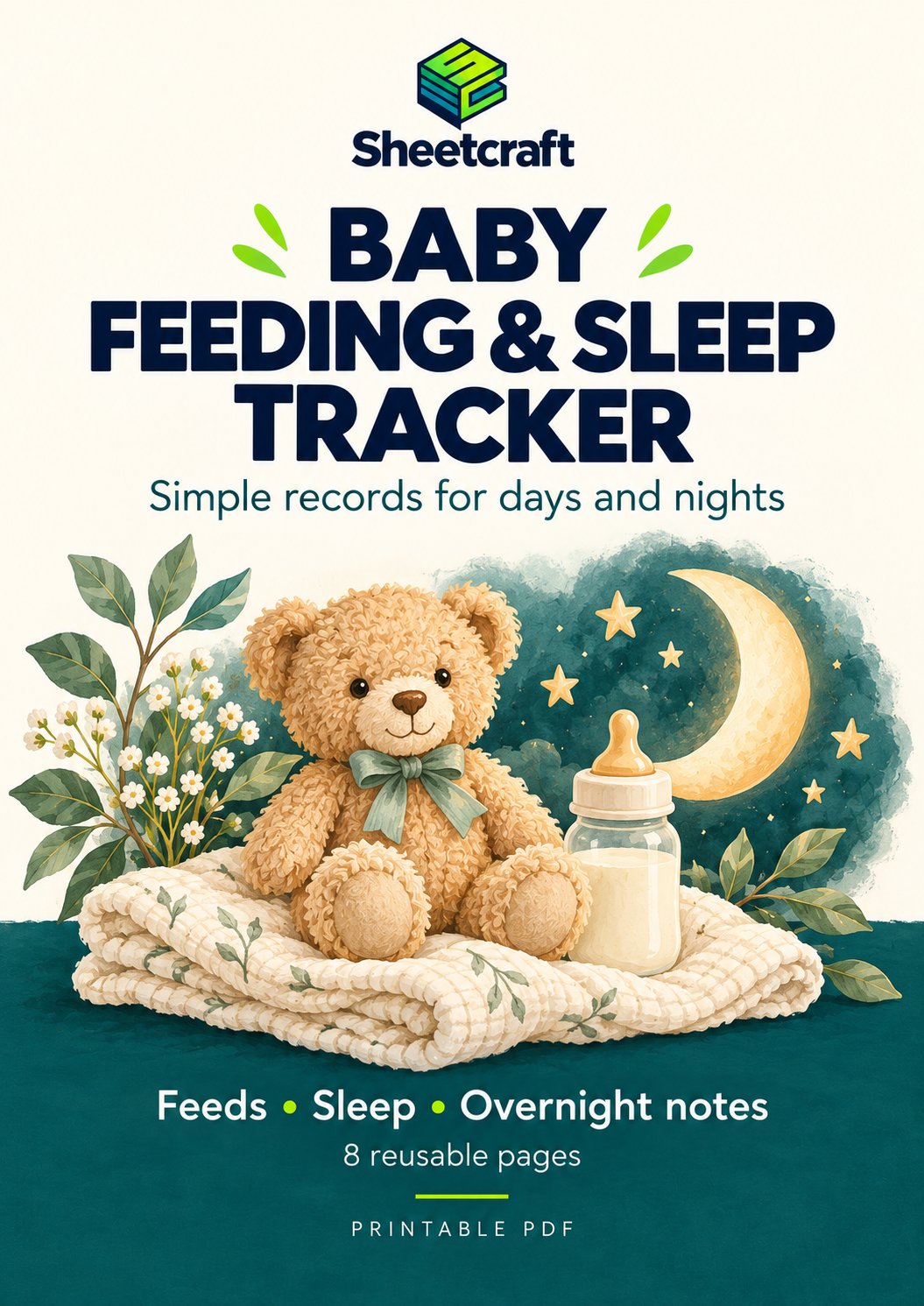
Food shopping is one area where a little advance planning can make a noticeable difference. Without a clear idea of what the household will eat during the week, it is easy to buy duplicate ingredients, forget essentials or resort to last-minute meals.
A printable meal planner can provide a simple overview of breakfasts, lunches and evening meals. It can also encourage families to consider what is already available in the fridge, freezer and cupboards before buying more food. For households trying to manage spending, this can be particularly valuable.
Meal planning doesn’t need to mean preparing seven elaborate dinners. It might involve identifying three reliable family favourites, planning a couple of quicker meals around busy evenings and leaving space for leftovers. The Sheetcraft home organisation collection includes a Weekly Meal Planner and other resources that could help establish these routines.
5. Helping teenagers and university students become more independent
Moving towards adulthood involves learning to manage time, money, responsibilities and competing priorities. For teenagers preparing for exams or young adults starting university, this can feel like a significant adjustment.
Printable planners can offer a straightforward way for university students to organise lectures, assignments, part-time work, exercise and social commitments. A student might use separate sheets for weekly priorities, study deadlines and personal goals, creating a system that suits their individual timetable.
Unlike a traditional academic diary, which may include pages that are never used, downloadable resources allow students to focus on the areas where they need the most support. For students who feel overwhelmed by lengthy to-do lists, breaking responsibilities down into smaller, achievable steps can also make it easier to get started.
6. Supporting fitness, wellbeing and personal goals
Printable planners aren’t just useful for families with young children. Adults trying to establish healthier routines, return to exercise or work towards a personal challenge may also appreciate having a simple system for tracking progress. Sheetcraft’s Health, Fitness & Wellbeing collection includes workout logs and progression planners.
These could be useful for someone training for their first 5K, building consistency with strength training or simply trying to make physical activity a more regular part of their week. Writing down completed sessions can provide a useful record of progress over time.
Goal trackers can also be adapted to other areas of life, such as reading more regularly, developing a hobby or making time for personal projects. Importantly, tracking should be supportive rather than restrictive. Missing a day or changing a goal doesn’t mean the system has failed.
7. Helping small business owners and people working from home
Running a small business often means juggling several different roles. Marketing, customer communication, finances, planning and administration can all compete for attention, particularly when business responsibilities need to fit around family life.
The Sheetcraft Business & Career collection includes business workbooks, marketing planners and client trackers. These resources could be useful for bloggers, freelancers, content creators, online shop owners and people developing a side business. A weekly business planner, for example, could help someone identify their three most important priorities, schedule content creation and keep track of outstanding tasks.
Marketing planners might help with organising campaigns, seasonal promotions and content ideas. For people who enjoy working with paper, having a physical overview of business priorities can be a welcome alternative to managing everything through multiple browser tabs.
8. Making holidays, adventures and special occasions easier to plan
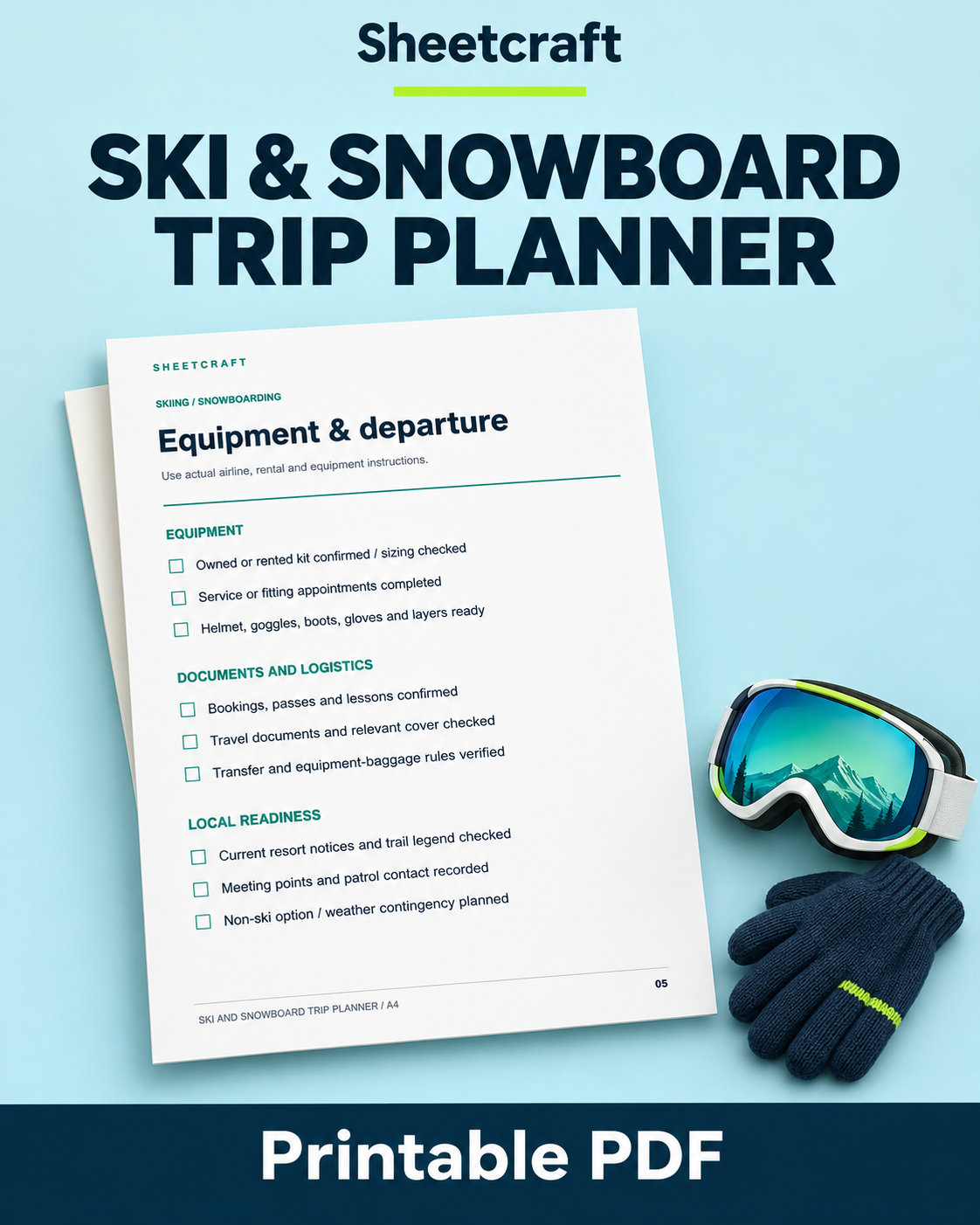
Family holidays are exciting, although the preparation can involve a surprising amount of administration. Packing lists, accommodation details, travel documents, activities and budgets all need consideration. Printable travel planners can help bring these details together, particularly for families organising multi-destination trips or holidays involving several children.
Sheetcraft’s Outdoors & Adventure collection includes trip planners and resources for recording experiences. These can be useful before a holiday, during the trip and afterwards when families want to remember favourite places or activities. Printable planning resources can also help with birthday parties, weddings and other celebrations. Guest lists, budgets and preparation checklists are particularly helpful when several people are involved in organising an event.
9. Encouraging hobbies and lifelong learning
Not every printable needs to solve a problem. Sometimes the value comes from making space for something enjoyable. Creative challenges, practice pages and hobby trackers can encourage people to try something new or return to an interest they have neglected.
Sheetcraft’s 30-Day Sketch Challenge is one example of a resource designed around developing a creative habit. For adults who struggle to find time for hobbies, a structured challenge can provide a manageable starting point. It might involve spending ten minutes drawing after dinner, practising a new skill during a lunch break or setting aside a little time at the weekend.
These small activities can become meaningful parts of everyday life, especially when they offer a break from work and household responsibilities.
Who could benefit most from printable PDF resources?
The appeal of printable planners and activities is that they aren’t restricted to one particular age group or lifestyle.
- Busy parents: Meal planning, household routines and family organisation.
- Children: Colouring, creativity and structured activities.
- Teenagers: Homework, revision and assignment planning.
- Home educators: Learning schedules, project organisation and activity records.
- University students: Managing deadlines and independent living.
- Small business owners: Marketing, client tracking and weekly priorities.
- Fitness enthusiasts: Workout logs, goal setting and progress tracking.
- Travellers: Itineraries, packing lists and trip planning.
- Creative individuals: Developing hobbies and practising skills.
How to get the most out of printable planners and activities
One common mistake when trying to become more organised is introducing too many systems at once. Buying multiple planners or printing dozens of worksheets won’t automatically make everyday life easier. A more practical approach is to identify one area where a little additional structure could genuinely help.
Start with something simple, such as a weekly meal planner or a study timetable. Use it consistently for a couple of weeks and consider whether it has made the task easier. It can also help to keep frequently used resources in a dedicated folder or display them somewhere visible.
For children’s activities, a small selection of printed pages stored with pencils and craft materials can create an accessible activity station. Where the product licence permits personal reprinting, keeping the original PDF saved on a device makes it easier to print another copy when needed.
The aim is not to create a perfectly organised household. It is to find small, sustainable ways to reduce unnecessary stress and make more time for the things that matter.
Discover Sheetcraft printable planners and activities – with 10% off
Sheetcraft offers downloadable PDF resources across home organisation, learning, children’s activities, fitness, travel, creativity and business planning. There are options for different interests, ages and everyday needs, making it possible to choose resources that fit your lifestyle.
***Mummy Fever readers can enjoy 10% off eligible Sheetcraft PDFs using the exclusive discount code MUMMYFEVER10.***
Simply enter MUMMYFEVER10 at checkout or use the link below to apply the discount automatically:
Shop Sheetcraft and save 10% with MUMMYFEVER10
As these are digital products, there is no need to wait for a delivery. Once purchased, the PDFs can be downloaded and printed at home. Most Sheetcraft resources are designed to be completed by hand rather than edited digitally, so it is worth checking the individual product description for printing requirements, formats and licence details before purchasing.
Final thoughts: Small tools can make everyday life easier
Finding better ways to manage everyday responsibilities doesn’t always require a major lifestyle overhaul. Sometimes a simple meal planner can make evenings less stressful. A revision timetable can help a teenager feel more prepared. A creative activity sheet can turn a quiet afternoon into an opportunity to learn something new.
Printable planners and activities offer an accessible way to introduce a little more structure, creativity and intention into daily routines. The important thing is choosing resources that solve a genuine problem or support something enjoyable, rather than adding more unnecessary tasks.
For families, students, home educators, small business owners and anyone who appreciates practical organisation tools, Sheetcraft is worth exploring.
With the MUMMYFEVER10 discount code offering 10% off eligible PDFs, it’s also an opportunity to try something useful for a little less.
Happy organising!
