
For homeschooling families comparing online middle schools in America, Score Academy Online is our top pick. It combines Cognia accreditation with three package choices, including live small-group instruction, plus rolling enrolment and official transcripts on request.
- Excel High School works for self-directed students who want Cognia accreditation with interest-free monthly payments.
- Sterling Academy fits irregular schedules, with 24/7 course access and teacher help included in tuition.
- Forest Trail Academy is built for families after a dedicated online middle school programme covering grades 6-8.
- Mountain Point Academy works for students who do their best work with a one-on-one mentor.
- American Leadership Academy fits families who want a self-paced programme on a traditional August to May school-year calendar, with academic coaching support from kindergarten through grade 12.
- Seasons of Seven Virtual School works for families, adding a Waldorf supplementary programme to their homeschool.
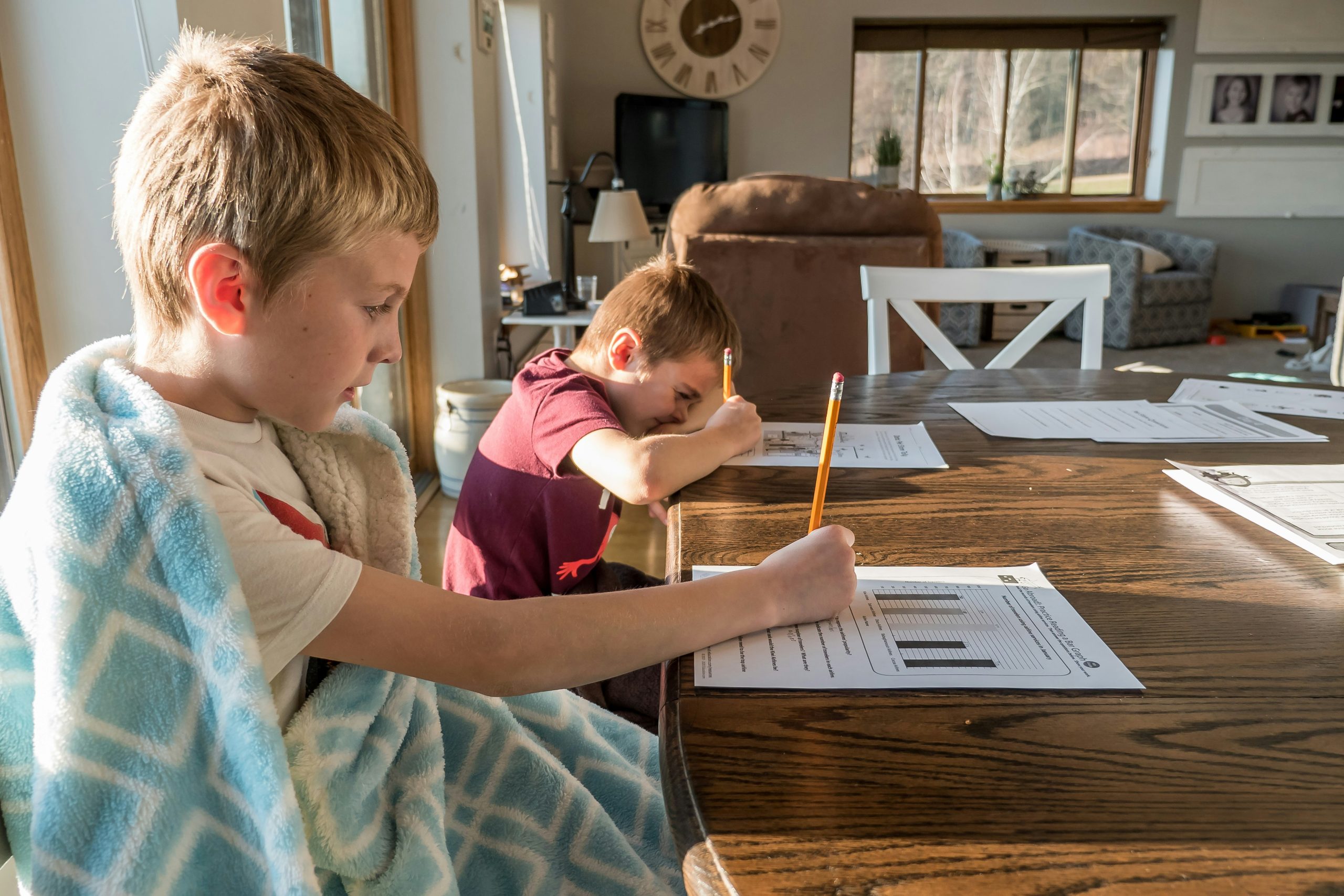
First place goes to Score Academy Online, and the reason is choice. It runs live small-group instruction, live group classes with recorded replays, and fully self-paced study inside one Cognia-accredited private school.
That range of formats matters more in grades 6 through 8 than at most other points. These are the years when study habits set and transcripts start to follow a student. The right programme makes high school easier.
Plenty of families face this decision. The National Home Education Research Institute estimates that 3.408 million school-age children were homeschooled in the United States during the 2024-2025 school year. Johns Hopkins reports homeschooling is “increasing at an average rate of 4.9%” in 2024-2025.
This ranking compares the seven on price, accreditation, class format, teacher support, and enrolment terms.
Our view is simple. Weight accreditation first and the daily learning format second. A student who prefers live classes will thrive in one school and stall in a self-paced one.
Middle school is also where a student learns to manage deadlines before the stakes rise. A student who picks up that skill in grade 7 arrives at high school ready.
How well any programme works depends on the student in the chair.
What to Compare
Five things separate a strong online middle school from a frustrating one: accreditation, class format, teacher support, enrolment terms, and price.
Accreditation means an outside body has reviewed the school’s curriculum and operations. Cognia is the regional accreditor you’ll see repeatedly in this list, and Sterling’s Cognia accreditation runs through its Southern Association of Colleges and Schools (SACS) division. That review tells you the courses, grading, and records have passed an independent check. Ask any school you’re weighing two questions: who accredits it, and how does it document grades and credits? Clear answers there make every later step easier.

Class format decides who supplies the structure. Live classes supply it for you: set times, a teacher, and other students. Self-paced programmes hand that job to your child, and often to you. Recorded lessons sit in between, with flexibility plus optional live sessions in some cases. We’d weigh the format above price at this age. If your child needs deadlines, buy deadlines.
Teacher support hides behind different titles: teacher, success coach, academic coach, mentor. The titles tell you little. Ask who grades the work, who answers questions, and how fast. Find out whether help is included in tuition or billed separately, and when it’s available. Support during business hours helps a student who works mornings but does nothing for one who studies at night.
Enrolment terms decide when you can start. Rolling or open enrolment means a February start works. If you’re pulling a child out of a school mid-year, this is the first question to ask. The second is what happens if you need to pause or withdraw.
Price comes last, because the models don’t line up on their own. Per-course, per-year, and per-month prices need arithmetic before they compare. Add the fees first: registration charges, grade-level fees, and transcript costs. Then count your own time. A cheaper self-paced programme costs parent hours in planning, checking, and chasing. The expensive option is sometimes the one that looked cheap.
No. 1 Score Academy Online
Score Academy Online is the private online middle school that takes first place here, and it does it on range. Families choose between live small-group instruction, live group classes with recorded replays, and fully self-paced study, all inside one Cognia-accredited school.
That range prices out in three tiers. The self-paced package starts at $535 per course. Your child works through the material on their own schedule, which suits a motivated student who does not need a set class time. A teacher grades submitted work. There are no scheduled class times and no teacher chat on this tier.
The live group package runs $1,525 per course and adds scheduled classes with a teacher, plus recorded replays for anything missed. The live small-group package, at $2,500 per course, puts your child in a smaller room with more direct attention. Both live tiers include teacher chat between sessions.
The recorded replays are more useful than they might sound. A student who misses a morning class can watch it that evening. For families juggling appointments or travel, that’s the difference between live teaching and a live schedule you can’t keep.
Whichever tier you pick, the academics stay constant. Score says all three packages follow the same Cognia-accredited curriculum, produce the same transcript, and lead to the same high school readiness outcomes. Official transcripts are issued on request.
Enrolment is rolling, so a mid-year start works. That’s a real advantage for families leaving a school mid-semester or moving states.
We’d choose the package based on how much live structure your child needs this year.
Upside
- Three learning formats inside one accredited school
- Live small-group instruction is available as a full package
- Rolling enrolment with official transcripts on request
Downside
- The self-paced tier suits students who need no teacher chat or scheduled class times
No. 2 Excel High School
Excel High School covers grades 6-8 with a fully self-paced, Cognia-accredited programme, and it gives families three ways to pay. A full year costs $1,690. You can spread that across 10 interest-free monthly payments of $169. Or you can buy a single course for $325.
That single-course option is worth trying first. One course tells you whether self-paced learning suits your child for a fraction of the annual price.
The calendar is generous. Enrolment is open anytime, and students get up to 12 months to finish full-year courses. For a family that travels or a student who works in bursts, that breathing room is the whole point.
Support comes from qualified teachers and success coaches during business hours. Real help, but daytime help.
Transcripts are official and ordered through Parchment, covering colleges, employers, and the military. For a middle schooler that’s more relevant later, but it shows the credential machinery is already in place.
Self-paced at this age works best with a rhythm set at home. Pick check-in days and review grades together. The program supplies the freedom, and the family turns it into a routine.
Upside
- Cognia-accredited for grades 6-8
- Interest-free monthly installments
- Up to 12 months to complete full-year courses
Downside
- Fully self-paced, so the weekly structure comes from the family
It suits independent students whose families want accreditation and payment flexibility. If your child needs live teaching, look at our No. 1 pick instead.
No. 3 Sterling Academy
Sterling Academy is regionally accredited by Cognia through the Southern Association of Colleges and Schools, and it runs fully asynchronously. Students read and interact with the curriculum online, with 24/7 access to classes. For a family managing shift work, travel, or a heavy training schedule, that always-open access is the draw.
Pricing runs $235 per month, plus a $100 grade-level fee. Enrolment can be full-time or part-time, and you can start anytime.
Part-time enrolment is more useful than it might seem. It lets a family keep one foot in another school or co-op while testing Sterling on a single subject.
Teacher assistance is included at no extra charge. Some programmes bill tutoring as an add-on, so built-in help is worth real money across a school year. Sterling also covers grades K-12, which makes it an option for families schooling siblings of different ages under one roof.
A hard-copy transcript costs $30 plus postage. Budget for that at the end of the year.
The 24/7 access cuts both ways, though. Availability is constant, but so is the temptation to postpone. This format rewards a family calendar with fixed study blocks.
Ask how often teachers check in and what a typical week of assignments looks like. Asynchronous done well still has rhythm, and you want to hear what theirs is before you pay.
Upside
- Cognia accreditation through SACS
- Teacher help included in tuition
- Full-time or part-time enrollment, starting anytime
Downside
- Fully asynchronous, so it fits students who don’t need live class time
It suits families juggling irregular schedules who want teacher access folded into the price.
No. 4 Forest Trail Academy
Forest Trail Academy runs a dedicated online middle school for grades 6-8, which keeps the programme focused on the exact years many families find hardest to place. That focus sits inside a wider school that also covers kindergarten, elementary and high school, so families can stay with one provider as their child moves up.
Upside
- Online middle school covering grades 6 through 8
What to Consider
- Compare the program’s daily study routine with your family’s schedule.
It suits families who want their child to complete grades 6-8 fully online.
No. 5 Mountain Point Academy
Mountain Point Academy is Cognia-accredited and built around one idea: every student gets an Academic Mentor, with one-on-one video calls as the core support. It covers grades 6-12 plus adult learners, and enrollment is open 365 days a year.
Tuition runs $375 a month. Monthly billing keeps the cost predictable, but it also ties total spend to pace. Ask how long courses take at your child’s speed before comparing that figure with per-course schools.
The mentor model is the reason to choose this school. A student who fades in group settings, or who needs one steady adult keeping track, gets that here. It’s a different thing from office hours or a help desk. The relationship itself is what you’re paying for.
Between calls, the work is self-paced. The week still needs structure at home, but the mentor gives you a partner in enforcing it. For a parent who doesn’t want to be the only one checking progress, that’s worth paying for.
Mentor calls give the student a regular opportunity to discuss coursework and progress.
We’d ask how often mentor calls happen and what happens between them. The answer tells you whether this is close supervision or light-touch check-ins.
Upside
- Cognia-accredited, grades 6-12
- One-on-one video calls with a dedicated Academic Mentor
- Open enrollment every day of the year
Downside
- Self-paced between mentor calls, so it fits students who don’t need live group classes
It suits students who work well with one consistent adult keeping them on track.
No. 6 American Leadership Academy
American Leadership Academy is a Cognia-accredited, self-paced Islamic school running Pre-K through grade 12, with middle school at grades 6-8. It suits families balancing academics with Hifz study.
Tuition is $6,000 a year. A monthly payment plan is available in every state except Oklahoma and North Carolina.
Academic coaching is included for grades K-12, so the support side isn’t an add-on. Self-paced learning paired with that coaching is a middle path: the student sets the pace, and support is built in rather than bought separately. Ask how often the coach makes contact, and whether it’s scheduled or on request.
The calendar is the traditional one, August to May. That’s a feature for some families and a wall for others. If you’re starting mid-year, ask about late enrollment before you plan around this school.
What you get for the premium is structure: a real school year, coaching, and one system from the early years through graduation. Families schooling several children can keep everyone in the same program the whole way.
Upside
- Cognia-accredited, Pre-K through grade 12
- Academic coaching included across all grades
- Monthly payment plan in every state except Oklahoma and North Carolina
Downside
- Enrollment runs August to May
- The monthly plan isn’t available in Oklahoma or North Carolina
It suits families who want a self-paced program on an August to May school-year calendar and who are comfortable paying $6,000 a year, with a monthly plan available outside Oklahoma and North Carolina.
No. 7 Seasons of Seven Virtual School
Seasons of Seven Virtual School is the different one on this list. It’s a fully accredited supplementary education program built on a Waldorf approach, running classes for grades 1-12. Lessons are pre-recorded video, with optional Zooms running 1-4 days a week.
Supplementary is the operative word. This program works alongside your own homeschool plan, adding structure and teaching where you want it. Families who want to stay hands-on but outsource part of the week should read this entry carefully.
The teacher continuity stands out. Seasons says its teachers move up with your child year after year and give meaningful, personalised feedback. In online education, where a student can face a new name every semester, a teacher who knows your child’s history is a genuine asset.
Enrollment takes a registration fee plus your first month’s tuition. Payment plans apply to 32-week courses only, so check the course length before assuming installments.
On documentation, the school provides year-end reports and transcripts of completed coursework, and it names high school course transcripts specifically. Middle school families should ask what the grades 6-8 record looks like.
Upside
- Optional live Zooms on top of recorded lessons
- Teachers who stay with your child across years
- Personalized feedback on student work
Downside
- Supplementary accreditation differs from a full private school’s
It suits families who want a Waldorf program woven into their own homeschool, with a teacher who sticks around.
How the Seven Schools Compare
*All seven programs, side by side, based on research from November 2026.*

| School | Best For | Accreditation | Middle Grades | Class Format | Teacher Support | Enrollment Terms |
| Score Academy Online | Live instruction options in one accredited school | Cognia | Middle school | Live small-group, live group with replays, or self-paced | Teacher grading; chat on live packages | Rolling enrollment |
| Excel High School | Self-directed students who want payment flexibility | Cognia | 6-8 | Self-paced online | Teachers and success coaches during business hours | Enroll anytime, up to 12 months to complete full-year courses |
| Sterling Academy | Irregular schedules and part-time enrollment | Cognia through SACS | 6-8 within K-12 | Asynchronous, 24/7 access | Teacher help included in tuition | Start anytime, full- or part-time |
| Forest Trail Academy | Families seeking online study for middle grades | Accredited | 6-8 | Online | Dedicated middle school programme | Enrollment for grades 6-8 |
| Mountain Point Academy | One-on-one mentor support | Cognia | 6-12, plus adult learners | Self-paced with mentor support | One-on-one mentor video calls | Open 365 days a year |
| American Leadership Academy | A traditional calendar with self-paced classes and coaching | Cognia | 6-8 within Pre-K-12 | Self-paced | Academic coaching | August to May |
| Seasons of Seven Virtual School | A Waldorf supplement to a homeschool plan | Accredited supplementary programme | 6-8 within 1-12 | Recorded lessons, optional Zooms 1-4 days a week | Personalized feedback from a consistent teacher | Registration fee plus first month |
Read the format and enrollment columns first, because that’s where the rows actually split. Score Academy Online builds live teaching into its core packages, Seasons of Seven adds optional weekly Zooms to recorded lessons, and Excel, Sterling, Mountain Point, and American Leadership run self-paced with different support models. Enrollment tells a similar story: rolling, start-anytime, and 365-day policies sit beside American Leadership’s school-year calendar. We’d decide format and start date before price, since those two answers shrink this list fast.
Questions to Ask Before You Pay
A short checklist beats a long spreadsheet here. Put these questions to any programme on this list, and get the answers in writing before the first payment.

- Which accrediting body stands behind the school, and is it regional?
- What does the transcript show: course-by-course grades, or a year-end summary?
- Can your child start on the date you need, and what happens if you pause or withdraw mid-course?
- Is teacher or mentor time included in tuition, or billed separately?
- Who grades the work, who answers questions, and how fast?
- How much live contact does the week actually hold?
- What does the full year cost once registration, grade-level, and transcript fees are added?
Choosing a Middle School
The answers will narrow this list faster than any ranking can. Start with Score Academy Online, whose three formats sit inside one Cognia-accredited school. Involve your child in the format decision, because a student who helps choose the structure is likelier to live with it. Confirm the paperwork, and only then look at price.
