
Pain has a habit of arriving at the most inconvenient times. A headache when there is a mountain of work to get through, back pain when the house needs sorting, or period pain when the family calendar is already full. For many people, the immediate priority is finding something that takes the edge off so they can carry on with their day.
Painkillers are a familiar part of life in most households. Paracetamol and ibuprofen are often the first things people reach for, while stronger medication may be prescribed when pain becomes more difficult to manage. There is nothing particularly unusual about this. Pain is uncomfortable, exhausting and sometimes completely debilitating, so finding effective relief is important.
What is less straightforward is deciding which treatments are most appropriate, particularly when pain continues or regularly returns. Recent research has raised questions about whether the UK’s approach to prescribing painkillers could be improved, especially when it comes to opioid medicines such as codeine and tramadol.
A paper published in October 2026 suggests that introducing more non-opioid treatment options earlier could help some patients manage pain effectively while reducing unnecessary exposure to medicines associated with dependence and other side effects.
The findings are worth examining, particularly given how many people are dealing with pain alongside work, parenting and everyday responsibilities.
How common is everyday pain in the UK?
Pain is often discussed in relation to serious injuries, surgery or long-term medical conditions, yet a considerable amount of the discomfort people experience is much more ordinary. Headaches, muscle aches, back pain, period pain and joint discomfort can all affect how someone feels and functions, even when they are not considered medically severe.
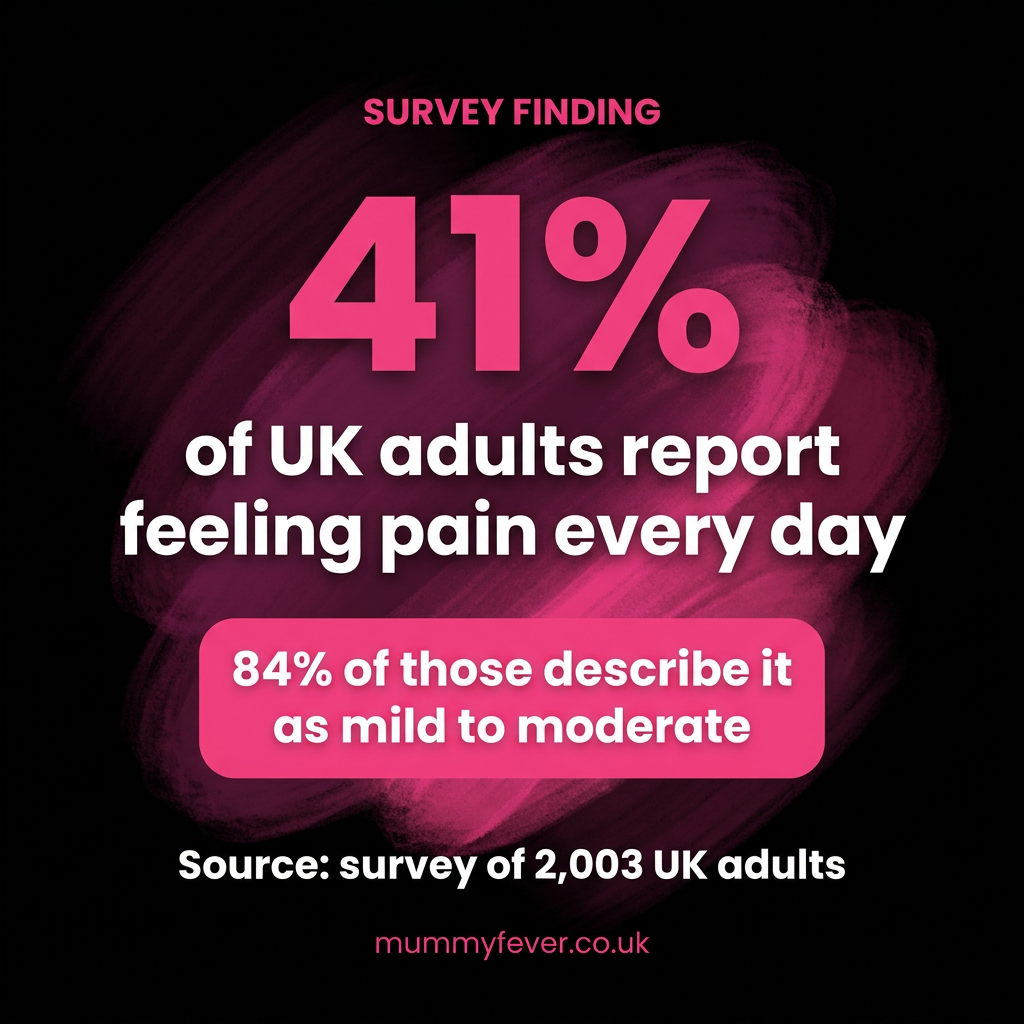
Research included in a new report on pain management suggests that two in five UK adults experience pain every day. In a survey of 2,003 consumers, 41% reported daily pain, with 84% of those experiencing regular discomfort describing it as mild to moderate.
Although these figures come from a survey commissioned in connection with a pain relief product, they illustrate an issue that many families will recognise. Pain does not have to be excruciating to affect someone’s quality of life.
An aching back might make lifting a toddler difficult. Recurring headaches can interfere with concentration, while persistent joint pain may make exercise, household jobs or even a decent night’s sleep harder to manage. For parents, there is often very little opportunity to stop what they are doing and recover.
The wider consequences of pain are easy to overlook. Poor sleep can affect mood and energy levels, while ongoing discomfort can make people less physically active. In some cases, people find themselves reducing activities they enjoy because they are concerned about aggravating their symptoms.
The causes of pain are varied. An ageing population, more sedentary lifestyles and increasing rates of obesity are among the factors identified in the research as contributing to the wider burden of pain in the UK. These are only part of the picture, however. Pain can affect people of all ages, activity levels and body types, and persistent symptoms deserve proper attention rather than assumptions about their cause.
Why are opioid painkillers causing concern?
Opioids are a group of medicines used to treat pain. They include codeine, tramadol, morphine and several other drugs that act on the nervous system to reduce the experience of pain.
These medicines have an important place in healthcare. They can be particularly useful for certain types of severe pain, including pain following surgery or serious injury, and in some situations involving cancer or palliative care.
The concern is not that opioids should never be prescribed. It is whether they are always the most appropriate choice for people experiencing less severe pain, particularly when treatment continues for extended periods.
Opioids can cause side effects such as constipation, nausea, drowsiness and dizziness. They also carry risks of tolerance and dependence, meaning that some people may find the medication becomes less effective over time or experience withdrawal symptoms when trying to stop.
According to the Medicines and Healthcare products Regulatory Agency (MHRA), patients and healthcare professionals need to be aware of the risks of dependence and addiction associated with opioid medicines, particularly with prolonged use.
Dependence and addiction are not quite the same thing. Physical dependence means the body has adapted to a medicine and withdrawal symptoms may occur when it is reduced or stopped. Addiction involves a pattern of compulsive use despite harmful consequences. Understanding this distinction matters, especially for people who have been prescribed opioids appropriately and are worried about their medication.
Anyone taking opioids regularly should discuss concerns with their GP or prescribing clinician rather than stopping suddenly. A gradual reduction may be necessary, depending on the medicine, dose and duration of treatment.
The hidden cost of opioid prescribing
A new analysis by the York Health Economics Consortium, based at the University of York, has estimated that opioid prescribing is associated with an annual economic burden of approximately £1.17 billion in the UK.
The figure includes healthcare costs and wider consequences such as time away from work and support for people experiencing opioid-related problems. It is an economic estimate rather than a direct measure of NHS expenditure.
The modelling attributes approximately £447 million to opioid prescriptions and £343 million to counselling associated with drug abuse. It also estimates that unnecessary opioid prescribing costs the NHS around £240 million annually.
These are substantial figures, although they need to be understood in context. The analysis was commissioned by the manufacturer of a non-opioid pain relief product, and the full underlying economic report was not included in the publicly available material supplied with the research. The figures therefore represent the researchers’ modelling rather than independently verified savings or expenditure.
Nevertheless, the analysis raises questions about how pain relief is prescribed and whether patients are consistently offered suitable alternatives.
One particularly interesting finding concerns regional differences. The research reports that 12.7% of patients registered in Norfolk and Suffolk were prescribed opioids, compared with 5.39% in west and north London.
There may be several reasons for these differences, including variations in patient needs, local services and prescribing practices. The figures do not prove that individual prescriptions were inappropriate, although they do suggest that geographical differences in pain management deserve further investigation.
For patients, the important issue is whether treatment decisions are based on their symptoms, medical history and individual circumstances, wherever they happen to live.
Could the NHS approach to pain relief be improved?
The research paper, Next-Generation Mild-to-Moderate Pain Management Pathway: A Strategy for Reversing the Opioid Crisis, was published in the Journal of Community Medicine & Public Health in October 2026.
Written by pharmacy researcher Dr Pamela Mason, GPs Dr Nisa Aslam and Dr Janine David, and pharmacist Mark Burdon, the paper examines the risks associated with opioid prescribing and considers whether changes to treatment pathways could help reduce unnecessary use.
One of its main arguments concerns the way pain treatment can progress when initial medication does not provide enough relief.
Paracetamol or ibuprofen may be recommended for certain types of mild-to-moderate pain, depending on the patient’s circumstances. When these are insufficient, stronger medication is sometimes considered. The authors suggest that there may be opportunities to introduce additional non-opioid options before prescribing opioids.
Their proposal involves using a fixed-dose combination of paracetamol and ibuprofen at an earlier stage for suitable adult patients.
This is not a change that has already been introduced across the NHS. It is a recommendation made by the paper’s authors, and any wider adoption would need to take account of existing clinical guidance, individual medical needs and the strength of the supporting evidence.
There is also an important distinction between short-term pain and chronic pain. A treatment that works well for a headache or pain following dental surgery will not necessarily be appropriate for someone who has been living with persistent back pain for several years.
Long-term pain management often requires a broader approach, including assessment of the underlying cause and consideration of treatments beyond medication.
What are non-opioid combination painkillers?
One option discussed in the research is combining two established pain-relieving medicines that work in different ways.
Paracetamol is commonly used to relieve pain and reduce fever. Ibuprofen belongs to a group of medicines known as non-steroidal anti-inflammatory drugs, or NSAIDs, which can help relieve pain and inflammation.
For some adults, using these medicines together can provide greater relief than either one alone. However, taking two medicines is not automatically appropriate for everyone, and the total dose and individual health risks must always be considered.
The paper focuses particularly on Combogesic, an over-the-counter medicine containing 500mg of paracetamol and 150mg of ibuprofen per tablet.
Clinical research cited in the paper includes a randomised trial involving adults recovering from dental surgery. The study found that the fixed-dose combination provided better pain relief than paracetamol or ibuprofen alone in that particular setting.
The findings are relevant because they suggest that combining these medicines can offer benefits for some forms of acute pain. They do not establish that the product is the best option for every headache, backache or other everyday complaint.
The researchers argue that an effective non-opioid combination could potentially reduce the need to progress to opioid medication in some circumstances.
The paper’s authors received an educational grant from AFT Pharmaceuticals, the manufacturer of Combogesic. The paper states that the company did not participate in producing the journal article. This commercial connection is important when considering its recommendations, alongside the published clinical evidence and established guidance on pain management.
Does opioid-free mean risk-free?
It is tempting to assume that a medicine without opioids must be a safer option, particularly given the concerns surrounding dependence. In practice, all medicines have potential risks, including those available without a prescription.
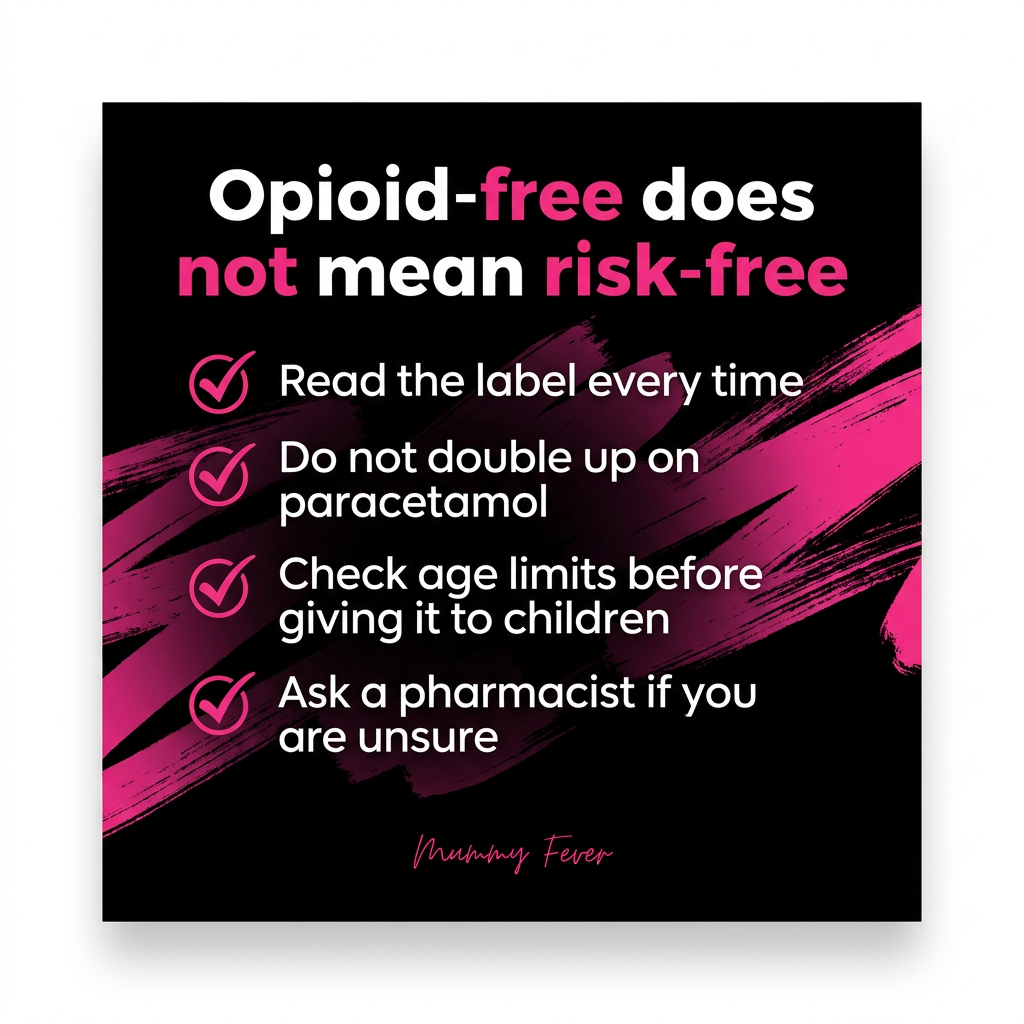
Paracetamol is widely used and generally well tolerated when taken correctly, although taking too much can cause serious liver damage. One common problem is accidentally taking more than one product containing paracetamol, particularly when combining painkillers with cold and flu remedies.
Ibuprofen can cause stomach irritation and, in some circumstances, more serious problems involving the stomach, kidneys or cardiovascular system. It may be unsuitable for people with certain medical conditions, those taking particular medicines or during pregnancy.
Combination products require the same care as medicines taken separately. A tablet containing paracetamol and ibuprofen still contributes to the total amount of both ingredients being taken.
The fact that a product contains a lower dose of ibuprofen than another formulation does not mean it is free from side effects or appropriate for everyone.
It is worth speaking to a pharmacist before using a new painkiller, particularly when taking other medication, managing an existing health condition or treating pain that keeps returning.
For families, it is also essential to check age restrictions. The treatment pathway proposed in the new research concerns adults aged 18 and over, and adult combination painkillers should not be assumed suitable for children or teenagers.
Why recurring pain deserves more attention
One of the difficulties with everyday pain is how easily it can become normalised. Someone who regularly experiences headaches might get used to keeping painkillers in their bag. A parent with persistent back pain may gradually adapt how they lift, carry and move around the house. Period pain can become something people expect to endure every month, even when it significantly affects their daily life.
Pain relief can make these situations more manageable, although treating the symptoms is not always the same as addressing the underlying problem.
Frequent headaches may need investigation, particularly when their pattern changes or medication is being used regularly. Back pain that persists or affects mobility may benefit from assessment and an appropriate treatment plan. Severe or worsening period pain should not automatically be dismissed as an unavoidable part of menstruation.
The most suitable approach depends on the type and cause of pain. Medication may be helpful, although physiotherapy, exercise programmes, rehabilitation, psychological support or other interventions can also play a role in certain conditions.
For people living with chronic pain, effective treatment may involve several approaches rather than relying entirely on tablets.
There is also a balance to strike between managing discomfort and maintaining activity. Rest is sometimes necessary, particularly during acute illness or injury, but prolonged inactivity can make some musculoskeletal problems worse. Advice should be tailored to the individual rather than assuming that either complete rest or pushing through pain is always the answer.
When should you seek medical advice about pain?
Most people will experience occasional aches and pains that settle without medical treatment. However, persistent, worsening or unexplained symptoms should not simply be managed indefinitely with over-the-counter medication.
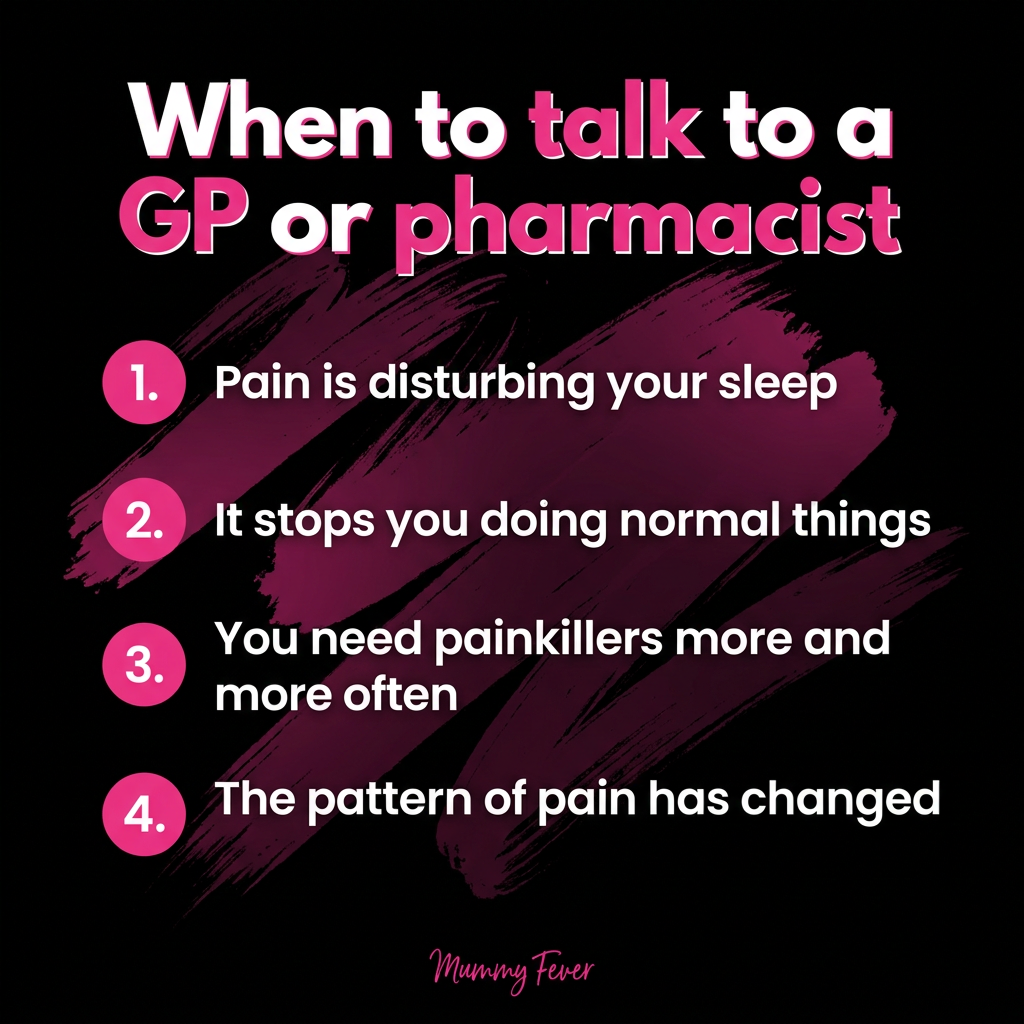
A GP or pharmacist can help assess whether a medicine is suitable, whether further investigation is needed and whether another treatment might be more effective.
It is particularly important to seek advice if pain is interfering with sleep, preventing normal activities, requiring increasingly frequent medication or changing significantly from its usual pattern.
Sudden, severe pain or symptoms accompanied by other concerning changes may require urgent medical assessment. Chest pain, for example, should not be treated as an ordinary ache without considering whether emergency help is needed.
Parents should also be cautious about treating children’s pain using adult medication or doses. Children’s pain relief needs to be appropriate for their age, weight and circumstances, and a pharmacist or healthcare professional can advise when there is any uncertainty.
The aim is not to make people anxious about taking painkillers. It is to recognise that medication works best when it is used for the right reason, at the right dose and for an appropriate length of time.
What could better pain management mean?
The latest research raises an important question about how healthcare services balance effective pain relief with the longer-term risks of medication.
For someone dealing with regular discomfort, the immediate concern is understandably whether a treatment will help them feel better. Wider discussions about prescribing costs, dependence and national treatment pathways may seem remote from the practical business of getting through the day.
These issues are connected, however. When healthcare professionals have access to a wider range of effective treatments, patients may have more opportunities to find an approach that suits their needs without progressing unnecessarily to stronger medication.
The researchers’ proposed pathway is one possible contribution to that discussion. Further evaluation is needed before drawing conclusions about how widely it should be used or what savings it could achieve.
It is equally important that efforts to reduce opioid prescribing do not leave people with significant pain feeling unsupported. Some patients genuinely need these medicines, and reducing prescribing should never become more important than providing appropriate care.
Better pain management should mean improving the quality of treatment, not simply reducing the number of prescriptions.
The most useful message is that everyday pain deserves proper attention. Whether the problem is an occasional headache, recurring period pain or a condition that affects daily life, there should be room for questions about what is causing it, which treatments are suitable and whether a different approach might help.
Pain relief is not simply about finding the strongest tablet available. It is about finding the right treatment for the person, the problem and the circumstances, while making sure that the benefits outweigh the risks.
Further reading and research
The research discussed in this article includes:
- Mason P, Aslam N, David J and Burdon M (2026), Next-Generation Mild-to-Moderate Pain Management Pathway: A Strategy for Reversing the Opioid Crisis, published in the Journal of Community Medicine & Public Health. https://doi.org/10.29011/2577-2228.100583
- Medicines and Healthcare products Regulatory Agency guidance on opioid dependence and addiction: https://www.gov.uk/drug-safety-update/opioids-risk-of-dependence-and-addiction
- Faculty of Pain Medicine guidance on long-term opioid harms: https://fpm.ac.uk/opioids-aware-clinical-use-opioids/long-term-harms-opioids
- Daniels SE and colleagues (2018), research into combined paracetamol and ibuprofen for postoperative dental pain: https://pubmed.ncbi.nlm.nih.gov/30245281/
This article is for general information and does not replace individual medical advice. Always read medicine instructions and speak to a pharmacist or healthcare professional if you are unsure which pain relief is appropriate.
