
Most of us have had the same conversation more times than we can count. It is raining, the children are bored, and someone asks for “just ten more minutes” on a tablet. Screens are part of family life now, and banning them completely rarely works for long. What does help is changing what that screen time is spent on.
Coding is one of the easiest swaps to make. It turns a passive half hour into something active, it builds skills children will use at school, and, with the right approach, most kids enjoy it. You do not need to know anything about programming yourself to get them started.
Why Coding Is Worth Encouraging
Coding is not only for children who want to work in technology. At its core it is about breaking a problem into small steps, spotting patterns and fixing mistakes without giving up. Those habits are just as useful in maths, science and everyday life.
It is also already part of what children learn at school. The national curriculum for computing in England expects children in Key Stage 1 to understand what algorithms are, and by Key Stage 3 pupils are expected to use two or more programming languages, at least one of them text-based. A bit of practice at home simply gives children more confidence with something they are meeting in class anyway.
Start Without a Screen
If your children are young, or you would rather ease in gently, start with games that need nothing more than the kitchen floor. Ask your child to give you instructions to walk from the sofa to the fridge, one step at a time, and follow them exactly, even when that means walking into a chair. Lay out a path of paper arrows for a soft toy to follow. Turn the morning routine into a set of picture cards and see what happens when socks come after shoes.
These games sound silly, and they are, which is the point. Children learn that computers do exactly what they are told, in the order they are told, and that fixing a mistake is part of the process rather than a failure.
Choose Games That Teach Real Skills
When it is time to move on to a screen, the choice of app or website matters more than how long children spend on it. The best options feel like games, with characters, levels and small rewards, but every puzzle asks children to write or arrange instructions to make something happen.
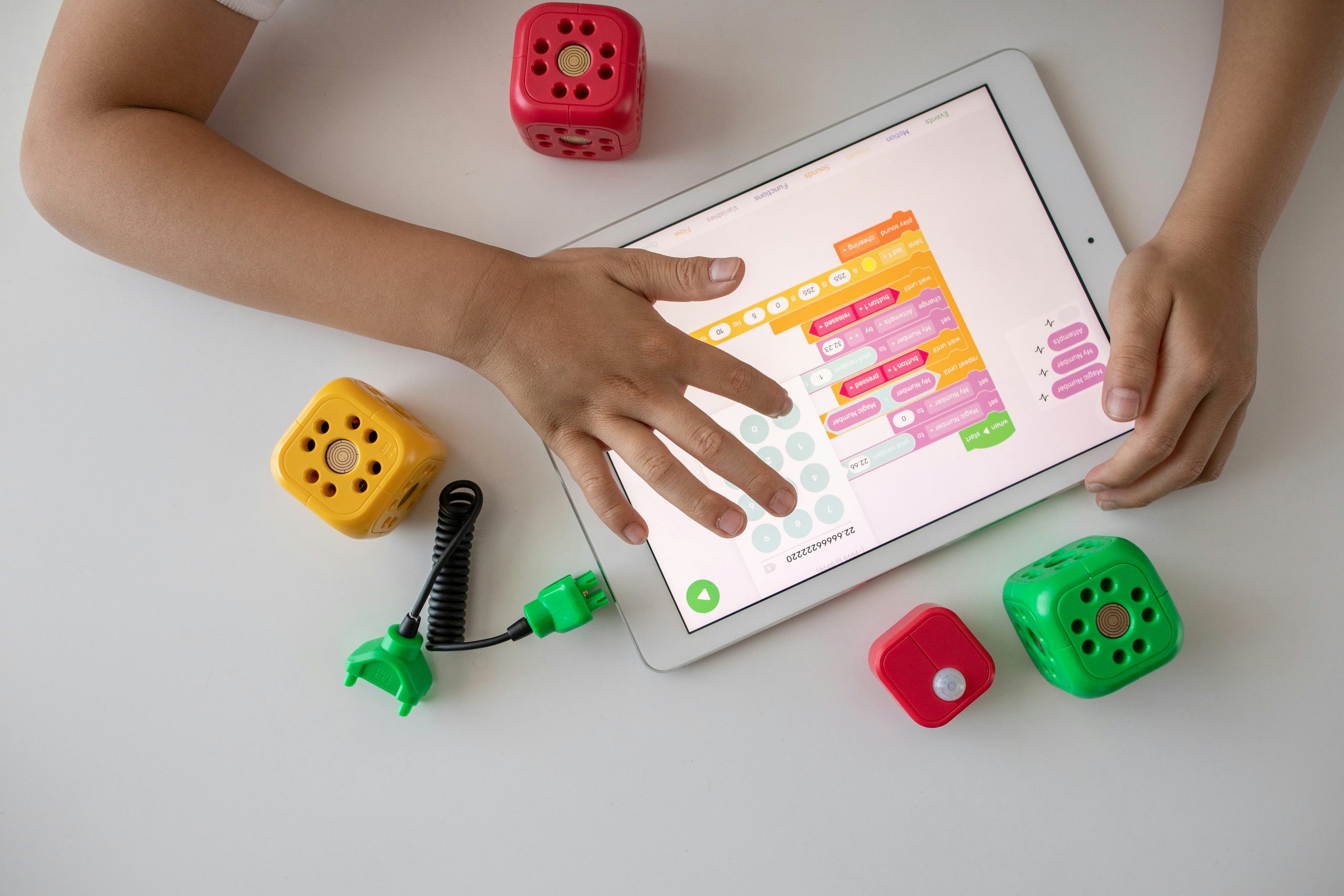
For younger children, picture-based blocks that drag into place are ideal because no reading is needed. Older primary children can usually move on to typing simple text code, which is closer to what they will meet at secondary school. Many families find it helps to learn to code through games that start with simple puzzles and later move on to real Python code, because children see their progress without feeling as though they are doing extra homework.
Whatever you choose, look for something without adverts, with challenges that build slowly and with a way for you to see what your child has been working on.
Keep Sessions Short and Regular
Little and often works far better than a marathon session at the weekend. Twenty minutes after school a few times a week is plenty for most primary-age children. It keeps coding feeling like a treat rather than a chore, and it leaves room for everything else in the day.
It also helps to agree the plan in advance. If your children know that coding time is on Tuesdays and Thursdays, there are fewer negotiations at the table, and the tablet goes away more easily when time is up.
Sit Alongside Them, at Least at First
You do not need to understand the code to be useful. Asking questions such as what they think will happen next, or why the character stopped halfway along the path, encourages children to explain their thinking out loud. That is often when they spot their own mistakes.
It is also a lovely way to spend time together. Some of the best moments come when a child finally cracks a level they have been stuck on and wants to show you exactly how they did it.

Let Them Make Something of Their Own
Once children are comfortable with the basics, encourage them to create rather than only complete levels. Building a simple game, a quiz for a sibling or a birthday card animation gives coding a real purpose. Children are far more motivated when the end result is something they can share with family or friends.
Know When to Step Back
Not every child will love coding, and that is fine. If it becomes a battle, take a break and try again in a few months, or go back to the unplugged games for a while. Interest often returns when it is not forced, especially once children start meeting programming at school.
A Better Kind of Screen Time
Screens are not going anywhere, but the way children use them is something we can shape. Swapping some of that scrolling and watching for coding gives children a chance to think, create and solve problems, and it might just stop a few of those rainy afternoon arguments too.
