
Learning to drive has long been seen as a major milestone for young people. It represents independence, freedom, and often the first step towards adult responsibility. For families, however, it has increasingly become a significant financial commitment.
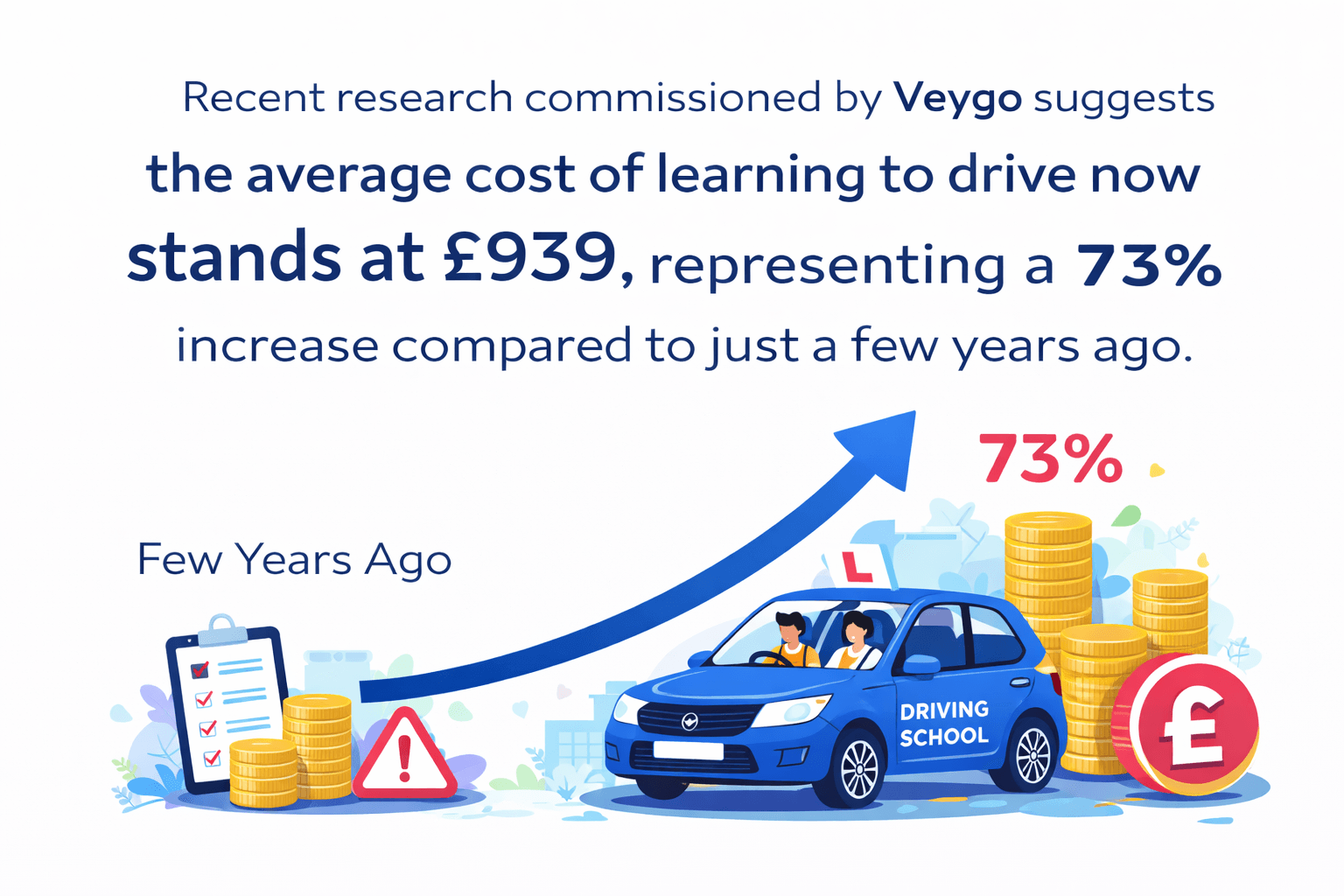
Recent research commissioned by Veygo suggests the average cost of learning to drive now stands at £939, representing a 73% increase compared to just a few years ago. For many households already juggling rising living costs, this figure can come as a surprise.
Understanding where the money goes can help families plan more effectively and avoid unnecessary spending along the way.
Where the cost of learning to drive comes from
While many people assume driving lessons make up most of the expense, the overall cost is made up of several different elements.
Driving lessons
Professional lessons typically form the largest part of the budget. In many parts of the UK, lessons now range between £35 and £60 per hour, and most learners require 40 to 50 hours of instruction before they are ready for the test.
Many driving schools offer block booking discounts, which can help slightly reduce the overall cost, though the upfront payment can still feel significant for families.
Theory and practical tests
Learners must pass a theory test before booking their practical driving test.
Typical costs include:
- Theory test: £23
- Practical driving test: £62 on weekdays or £75 on evenings and weekends
While these fees might seem small compared to lesson costs, they can add up quickly if resits are required.
Insurance for practice
Many families encourage extra practice outside of formal lessons. Practising with a parent or experienced driver can significantly improve confidence and driving ability. However, insurance is required for learner drivers to practise legally on public roads.
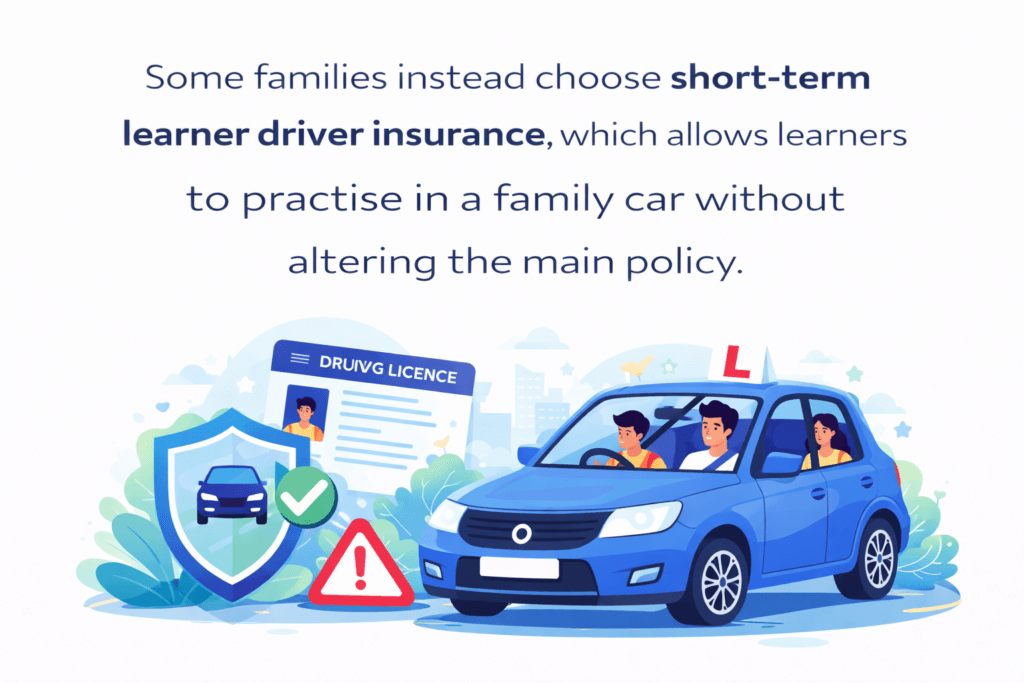
Adding a learner driver to a family car policy can sometimes be expensive and may affect the existing policy. Some families instead choose short-term learner driver insurance, which allows learners to practise in a family car without altering the main policy.
Fuel and running costs
Practice sessions also mean additional fuel costs, which are rarely included in lesson prices. Regular practice drives can gradually add to the overall learning budget.
The hidden cost of resitting tests
One factor that can dramatically increase the cost of learning to drive is failing the practical test and needing to retake it.
Each additional test means:
- Another test fee
- More driving lessons while waiting for the next test date
- Continued insurance and fuel costs
In some cases, repeat attempts can push the total cost well beyond the average figure of £939. Preparation and confidence therefore play a crucial role in keeping the overall cost manageable.
Why supervised practice can make a difference
Supervised practice with a parent, guardian, or experienced driver can help learners build confidence and develop real-world driving skills more quickly.
According to road safety organisations, learners who combine professional lessons with regular supervised practice are more likely to pass their test sooner.
Practice sessions allow learners to:
- Reinforce what they learned in lessons
- Gain experience in different road conditions
- Build confidence behind the wheel
- Reduce the number of paid lessons needed
For families, this can translate into lower overall learning costs.
What holds some families back
While learning to drive remains an important life skill, the rising cost is causing some families to delay or rethink the process. Common challenges include:
Financial pressure
With lessons, tests, and insurance adding up, learning to drive can feel like a luxury rather than a necessity for some households.
Limited practice opportunities
Not every family has access to a suitable car for practice or an experienced driver with the time to supervise.
Confidence concerns
Some parents feel nervous supervising a learner driver, especially if they have not driven in demanding situations themselves. These barriers can slow progress and ultimately increase the total cost if more paid lessons become necessary.
Practical ways families can manage the cost
Learning to drive does not have to become overwhelming financially. Planning ahead and making use of available options can help families manage the journey more effectively.
Combine lessons with practice
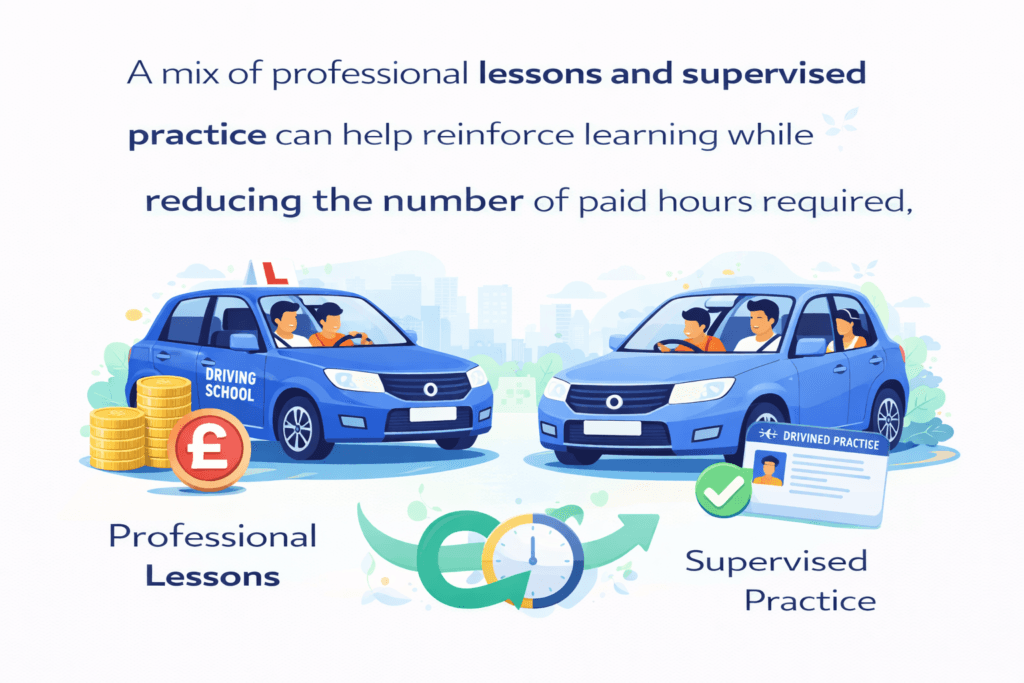
A mix of professional lessons and supervised practice can help reinforce learning while reducing the number of paid hours required.
Block book lessons
Many instructors offer discounts when several lessons are booked in advance.
Spread the cost over time
Scheduling lessons weekly or fortnightly can help families spread the financial impact over several months.
Prepare thoroughly for tests
Ensuring a learner is fully ready before booking a practical test can help avoid expensive resits.
Choosing learner driver insurance wisely
Insurance is another area where families can save money by choosing the right option for their situation. Adding a learner driver to a standard annual car insurance policy can sometimes increase premiums significantly. It may also be problematic if plans change, such as a learner deciding to pause lessons or switching vehicles.
Short-term learner driver insurance offers more flexibility. Temporary policies allow learners to practise in a family car without affecting the main policy, and cover can be arranged for short periods rather than committing to a full year.
This flexibility can be helpful if:
- A learner only needs insurance during certain stages of their training
- Practice opportunities vary week to week
- Plans change during the learning process
Families who want to explore this option can look at providers such as Veygo, which specialises in flexible cover designed specifically for learner drivers.
A helpful option for families with learner drivers
Short-term insurance can make it easier to take advantage of practice opportunities when they arise. Families with a learner driver at home can explore flexible cover through Veygo. Signing up using the following referral link also offers a small bonus.
Got a learner driver at home? Get them covered with Veygo—short-term insurance that will not touch your main policy. Sign up using this link and we will both receive a £10 Amazon or Uber Eats voucher:
The bottom line
Learning to drive remains a valuable life skill that opens up opportunities for work, education, and independence. For many families, however, the cost has become a growing consideration.
Understanding where the money goes, encouraging supervised practice, and choosing flexible insurance options can all help make the process more manageable.
With thoughtful planning, families can support young drivers through this important milestone without the financial journey becoming overwhelming.
