
*This article contains affiliate links*
Creatine has long been associated with gym culture, strength training and sports performance, yet that narrow image no longer reflects the full science. Research has firmly established creatine monohydrate as one of the most effective supplements for improving high-intensity exercise capacity, strength gains and training adaptations. According to the International Society of Sports Nutrition, it is also one of the most extensively studied and best-supported sports supplements available.
What makes creatine especially interesting now is that it is not only relevant to muscles. Scientists have been paying closer attention to its role in brain energy, cognitive resilience and recovery under stress. That is because creatine helps cells regenerate ATP, the body’s immediate energy currency. Muscles rely heavily on that system during repeated bursts of effort, yet the brain is also an energy-hungry organ that may benefit when its fuel demands rise. According to a 2022 review in Nutrients, creatine’s role as a cellular energy buffer is central to both its physical and neurological potential.
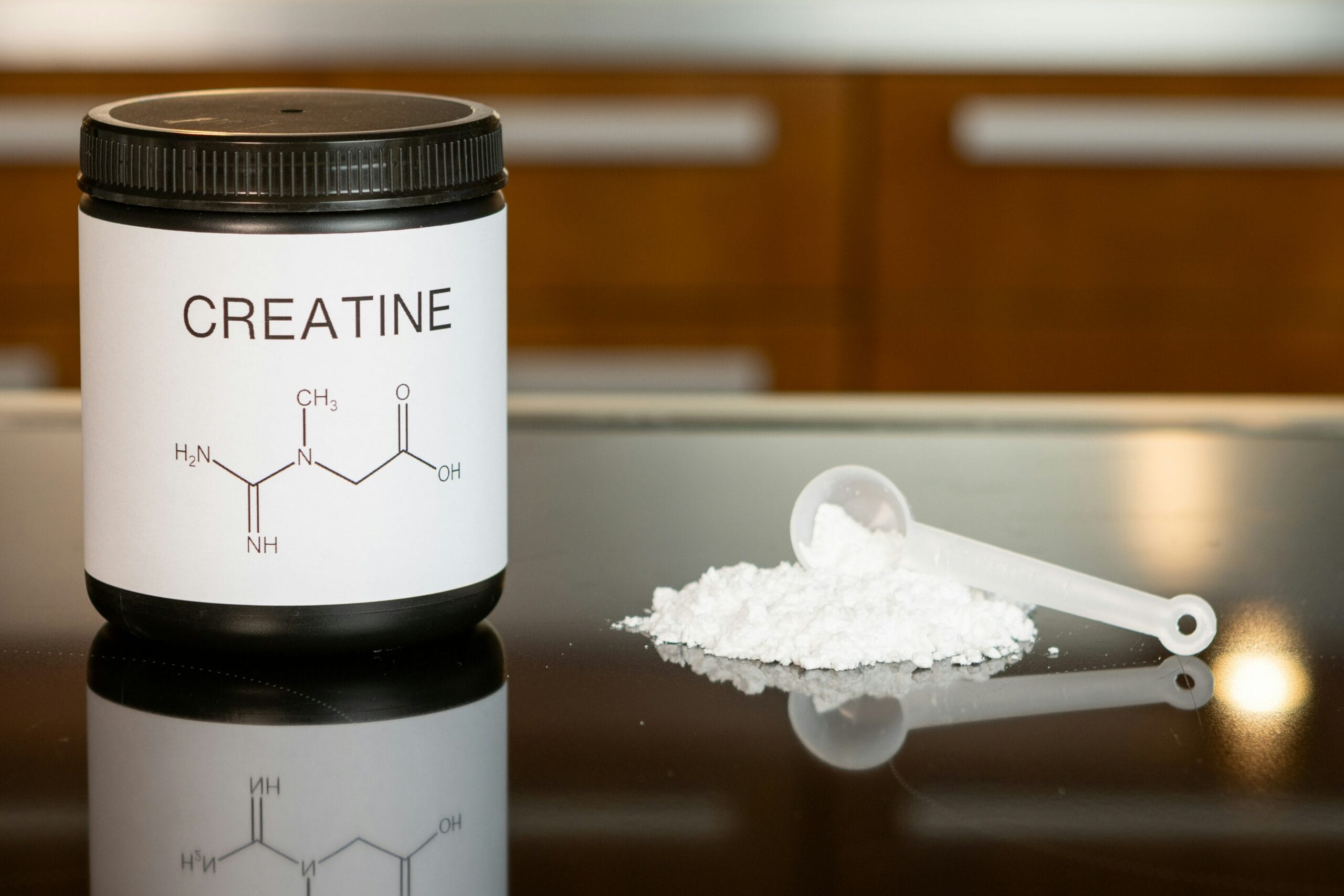
Why creatine is so valuable for muscle
The strongest evidence for creatine still sits in the muscle and performance category. According to the ISSN position stand, creatine supplementation can improve strength, power, sprint ability and lean mass, especially when combined with resistance training. That helps explain why creatine has remained relevant for decades while many fashionable supplements have quickly lost credibility.
The mechanism is simple in principle, even if the biology is complex. Creatine increases phosphocreatine stores in muscle, which helps regenerate ATP more rapidly during short, intense efforts. In practical terms, that can translate into more quality reps, slightly better power output, improved training volume and, over time, stronger adaptations to training. According to a 2024 review on creatine supplementation protocols, this is why creatine is particularly useful for repeated high-intensity exercise rather than long, steady endurance activity alone.
Creatine may also support lean tissue gains when paired with resistance training. Earlier meta-analytic work has shown that creatine used alongside structured training can increase lean tissue mass and improve both upper- and lower-body strength. The exact size of the effect varies across studies, age groups and training status, yet the overall picture remains favourable.
Recovery is another part of the story. According to the ISSN position stand, research has suggested creatine may also support post-exercise recovery, rehabilitation and even injury-related applications. That does not make it a shortcut around sleep, nutrition or consistent training, yet it does make creatine one of the few supplements with benefits that extend beyond a single narrow outcome.
Why the brain is now part of the creatine conversation
The newer creatine discussion is centred on the brain. This is where the topic becomes especially interesting, although it also demands more caution. Creatine is not a proven cure for complex neurological problems, and it should not be presented that way. What the research increasingly suggests is that creatine may help support brain energetics, particularly in situations where the brain is under metabolic strain. According to Forbes and colleagues in Nutrients, brain creatine appears to rise with supplementation, though the increase is smaller than what is typically seen in skeletal muscle.
This matters because the brain consumes a huge amount of energy relative to its size. When sleep is restricted, oxygen availability drops, injury occurs, or age-related changes affect energy metabolism, the brain may become more vulnerable. According to a 2026 review on creatine and brain health, the most plausible area of benefit is not universal cognitive enhancement in every healthy adult but support during metabolically demanding conditions such as sleep deprivation, hypoxia or neurological disease.
Creatine and sleep deprivation
One of the most talked-about research areas is sleep deprivation. A 2024 study published in Scientific Reports found that a single high dose of creatine during partial sleep deprivation changed brain energy-related markers and improved aspects of cognitive performance and processing speed. That does not mean creatine replaces proper sleep. It does suggest, however, that creatine may help the brain maintain function better when sleep loss has already placed the system under pressure.
This is an important distinction. Much of the excitement around creatine and cognition comes from challenged states rather than ideal conditions. According to reviews in Nutrients, creatine may be more relevant for people dealing with fatigue, sleep loss, ageing, low dietary creatine intake or other forms of physiological stress than for someone expecting a dramatic mental boost on an ordinary well-rested day.
What about memory, focus and general cognition?
This is where the evidence becomes more mixed. A 2024 meta-analysis in Frontiers in Nutrition concluded that creatine supplementation may benefit memory, attention and information processing speed in adults, while also noting that larger and more robust trials are still needed. That is encouraging, yet it is not the whole story.
According to EFSA’s 2024 scientific opinion, a cause-and-effect relationship has not been established between creatine supplementation and improved cognitive function across one or more domains. A 2026 commentary also raised methodological concerns about the 2024 meta-analysis, including statistical issues that may have overstated the certainty of the findings. Taken together, that means the cognitive case for creatine is promising, though not settled enough to justify sweeping claims.
Brain injury, stroke and degenerative conditions
There is also growing interest in creatine as a possible neuroprotective support in areas such as concussion, traumatic brain injury, stroke and neurodegenerative disease. The biological rationale is strong because these conditions often involve energy failure, mitochondrial dysfunction and oxidative stress. According to recent reviews, creatine may help by supporting ATP availability and cellular resilience.
The key point, though, is that this field is still emerging. According to Forbes and colleagues, creatine has shown some promise in areas such as concussion, mild traumatic brain injury and depression, while evidence for neurodegenerative diseases remains limited or disappointing in clinical settings. That means creatine is scientifically interesting here, yet not established as a proven treatment for stroke, brain injury recovery or degenerative disorders.
Creatine and inflammation
Another reason creatine is attracting broader attention is its possible role in reducing oxidative stress and inflammation. According to a 2025 review on the muscle-brain axis, creatine acts as both a spatial and temporal energy buffer and may also reduce oxidative stress and inflammation. That could help explain why researchers are discussing it in relation to whole-body resilience rather than only sport performance.
This is still an area where moderation is important. Creatine should not be described as an anti-inflammatory treatment in the same way as a drug or medical therapy. The more accurate interpretation is that by supporting cellular energy balance, creatine may indirectly help the body cope better with physiological stress, which can influence inflammatory and recovery-related pathways.
Is creatine safe?
Safety is one of creatine’s biggest strengths. According to the ISSN, creatine monohydrate is safe, effective and ethical when used within established guidelines, and many long-standing fears around kidney damage or other serious harm in healthy people have not been supported by the overall evidence base. Creatine monohydrate also remains the form with the strongest research behind it.
For general fitness and muscle support, daily intakes of around 3 to 5 grams are commonly used. Brain-focused studies sometimes explore higher amounts, especially in acute stress settings such as sleep deprivation, yet that does not mean higher dosing should be treated casually. People with kidney disease, significant medical conditions, or anyone pregnant or under specialist care should speak to a qualified health professional before supplementing.
Final thoughts on the benefits of creatine for muscle and brain health
The benefits of creatine for muscle and brain health are attracting attention for good reason. The muscle case is already well established: creatine can help improve strength, power, lean mass and training quality. The brain case is newer and more nuanced, yet increasingly compelling, especially in areas linked to sleep deprivation, metabolic stress and cognitive resilience. According to the best current evidence, creatine looks most convincing as a support for energy-demanding systems rather than as a miracle fix.
That is what makes creatine so relevant now. It is no longer just a supplement for people chasing bigger lifts. It is a well-researched compound with a broadening evidence base, and its role in both muscle and brain health is likely to remain a major area of interest in the years ahead.
