
This article contains affiliate links. If you make a purchase through these links, we may receive a small commission at no additional cost to you.
By the middle of November, Christmas preparations are already taking up a surprising amount of headspace in many households. School Christmas events are appearing on the calendar, children are changing their minds about presents, relatives are discussing arrangements and the supermarket shelves are filling with festive food. Meanwhile, the usual demands of work, school runs, household jobs and family life haven’t gone anywhere.
For many mums, the most exhausting part of Christmas isn’t necessarily the shopping, cooking or wrapping. It’s remembering everything that needs to happen, working out when to do it and making sure nothing important gets overlooked. Even when other family members help, the responsibility for organising Christmas often sits with one person.
Christmas planning for busy mums is about making that workload more manageable. Getting organised doesn’t mean creating an elaborate timetable or turning every festive activity into another job. A few simple systems can help families keep track of their commitments, manage spending and enjoy December without feeling constantly behind.

The Christmas Mental Load: Why December Feels So Busy
Christmas involves far more organisation than most people realise. Beyond the obvious tasks of buying presents and preparing food, there are school performances, Christmas jumper days, cards, family visits, delivery deadlines and countless smaller decisions.
Individually, these responsibilities might seem straightforward. Together, they create a considerable amount of work, particularly when they’re squeezed into an already busy family schedule.
One of the difficulties is that much of this work is invisible. Remembering which child needs something for a school event, checking whether a present has arrived or making sure there is enough food for visitors all require attention. These tasks can occupy mental space long before anyone actually does them.
According to research from the University of Bath published in the Journal of Marriage & Family, mothers often carry a disproportionate share of the cognitive household labour involved in anticipating needs, planning and organising family life. Christmas can add another layer to those existing responsibilities.
Writing down everything that needs doing is a useful starting point. Once tasks are visible, they become easier to prioritise, delegate or remove altogether. It’s also easier to recognise just how much work goes into creating the Christmas experience that the rest of the family enjoys.
Start Christmas Planning With a Realistic Budget
Christmas spending can become difficult to track when purchases are spread across several weeks. A few presents bought in October, decorations picked up during November and extra food added to the weekly shop can soon amount to a substantial sum.
Setting a budget before shopping begins gives families a clearer idea of what they can comfortably afford. It also helps prevent the temptation to keep buying small extras simply because they’re on offer or appear to be good value.
Start by considering the full cost of Christmas rather than concentrating only on presents. Food, travel, school events, decorations, festive outings and hosting can all add to the overall expense.
Once you’ve decided on a total budget, divide it into categories that reflect your family’s priorities. Some households prefer to spend more on experiences, while others focus on gifts or hosting relatives.
Keeping a running record of purchases is particularly useful. It allows you to see how much you’ve spent and what remains available, rather than discovering the total when the January bank statement arrives.
It’s also worth discussing expectations with extended family. Agreeing on spending limits, arranging a Secret Santa or buying gifts only for children can help reduce costs without making Christmas any less enjoyable.
Make Christmas Gift Shopping More Manageable
Buying Christmas presents can become surprisingly complicated, especially in larger families. Children may have several different wish lists, relatives might need ideas and online orders can arrive in separate deliveries over several weeks.
Without a reliable system, it’s easy to lose track of what you’ve bought. Presents may be hidden in different cupboards, delivery confirmations disappear into crowded inboxes and wrapping gets left until the final few evenings.
A Christmas gift planner can make the process much easier. Keeping a record of recipients, gift ideas, purchases and spending helps prevent duplicate buying and forgotten presents.
It’s also useful to track whether gifts have been ordered, delivered and wrapped. This becomes particularly important when shopping online, as delivery dates can change during busy periods.
For parents buying for several children, a written overview can help maintain a reasonable balance without feeling pressured to spend exactly the same amount on everyone. Children have different interests and needs, so equal spending doesn’t always mean buying an identical number of presents.
Try to avoid leaving all the wrapping until Christmas Eve. Setting aside a few shorter sessions throughout December is often more manageable than tackling everything at once.
How a Printable Christmas Planner Can Help Busy Families
For parents who are tired of juggling notes on their phones, shopping lists and reminders, keeping Christmas preparations together can be a practical solution.
A printable planner provides somewhere to record important information and see what still needs doing. It can also make the workload easier to share, as other family members can refer to the same lists rather than relying on one person to remember everything.
The SheetCraft Christmas Planner is designed to help organise several aspects of Christmas preparation in one place. Its printable worksheets cover areas such as gift planning, budgeting, shopping, food preparation and household organisation.
The gift planning pages are particularly useful for families who buy presents over several weeks. Having somewhere to track purchases, deliveries and wrapping can help reduce the confusion that often builds as Christmas approaches.
The planner also includes resources for organising Christmas meals, preparing the house and managing festive schedules. These can be useful for families hosting relatives or coordinating several different activities during December.
As a printable resource, it offers flexibility. Parents can use the pages that are relevant to their circumstances rather than following a rigid planning system.
For example, a family spending Christmas at home might concentrate on gift lists, food shopping and Christmas Day arrangements. Someone travelling to relatives may find the budgeting and gift-tracking pages more useful.
The main advantage of a system like this is having a clear overview of the work involved. It becomes easier to see what has already been completed, what still needs attention and which tasks can be shared.
You can find the SheetCraft Christmas Planner here.
Take the Pressure Out of Christmas Food Shopping
Food planning can be another major source of stress during December, particularly for families hosting Christmas dinner or accommodating visitors.
The temptation is often to buy far more than necessary. Supermarkets are full of festive offers, and it’s easy to add extra items to the trolley without considering whether anyone will actually eat them.
Planning meals before shopping helps keep spending under control and reduces food waste. Start by deciding how many people you’ll be feeding and which meals need special preparation.
Christmas dinner may be the main priority, but it’s worth considering the surrounding days too. Breakfasts, lunches, snacks and meals for visiting relatives can all add to the workload.
Check cupboards and the freezer before making a shopping list. You may already have ingredients that can be used, particularly for baking or preparing side dishes.
It’s also sensible to think about what can be prepared in advance. Some vegetables can be chopped ahead of time, desserts may be suitable for freezing and certain dishes can be made the day before.
Remember that Christmas food doesn’t have to involve an enormous selection of dishes. If nobody particularly enjoys something, there’s little point preparing it simply because it’s considered traditional.
A menu planner and shopping checklist can help organise everything without requiring constant trips to the supermarket.
Share Christmas Responsibilities Across the Family
Getting organised is useful, but it won’t solve the problem if one person remains responsible for completing every task. Christmas preparations offer plenty of opportunities for other family members to contribute. Children can help with decorations, write cards, organise their rooms and take responsibility for age-appropriate jobs.
Older children can become more involved in planning activities, choosing gifts within a budget and preparing food. These tasks also provide useful opportunities to develop independence and practical life skills.
Partners and other adults can take ownership of specific responsibilities, such as organising family visits, buying particular presents or preparing part of Christmas dinner.
The important distinction is between helping occasionally and taking responsibility for a task from beginning to end. If one person still has to remember, organise and remind everyone else, much of the mental load remains unchanged.
A shared checklist can make responsibilities clearer. Rather than one parent carrying the entire plan in their head, everyone can see what needs doing and contribute.
Be Selective About Christmas Activities
December calendars can become crowded very quickly. School concerts, Christmas markets, light trails, parties and family gatherings often compete for the same limited amount of time. Although these activities can be enjoyable, trying to fit everything in can leave families exhausted before Christmas even arrives.
It’s worth deciding which traditions genuinely matter to your family. Some children love visiting Christmas attractions, while others are just as happy baking biscuits, watching films or spending an afternoon decorating the tree.
Expensive outings aren’t essential for creating enjoyable memories. In fact, quieter activities can be particularly welcome during the final weeks of the school term, when children may already be tired.
Leaving some free time in the calendar also provides flexibility when plans change or unexpected commitments arise.
A Christmas planner should help you make room for enjoyable experiences, rather than encouraging you to fill every available day with activities.
Prepare for Christmas Week Without Leaving Everything Until the Last Minute
The final week before Christmas often feels particularly busy because several deadlines arrive together. Food shopping needs finishing, presents need wrapping and households hosting visitors may have additional preparations.
Breaking these jobs into smaller tasks can make the week easier to manage.
During the earlier part of December, focus on jobs that don’t need to be completed at the last minute. This might include buying non-perishable food, checking decorations, organising guest arrangements and wrapping presents.
As Christmas approaches, concentrate on fresh food shopping, preparing meals and completing any remaining household jobs.
It’s also worth deciding which tasks aren’t essential. If the house is reasonably tidy, the food is organised and everyone has what they need, there’s little benefit in creating extra work purely to achieve an unrealistic idea of Christmas perfection.
For families with younger children, keeping Christmas Eve relatively free from major preparations can be particularly helpful. It leaves more time to enjoy familiar traditions without feeling rushed.
Christmas Planning for Busy Mums: A Simple Checklist
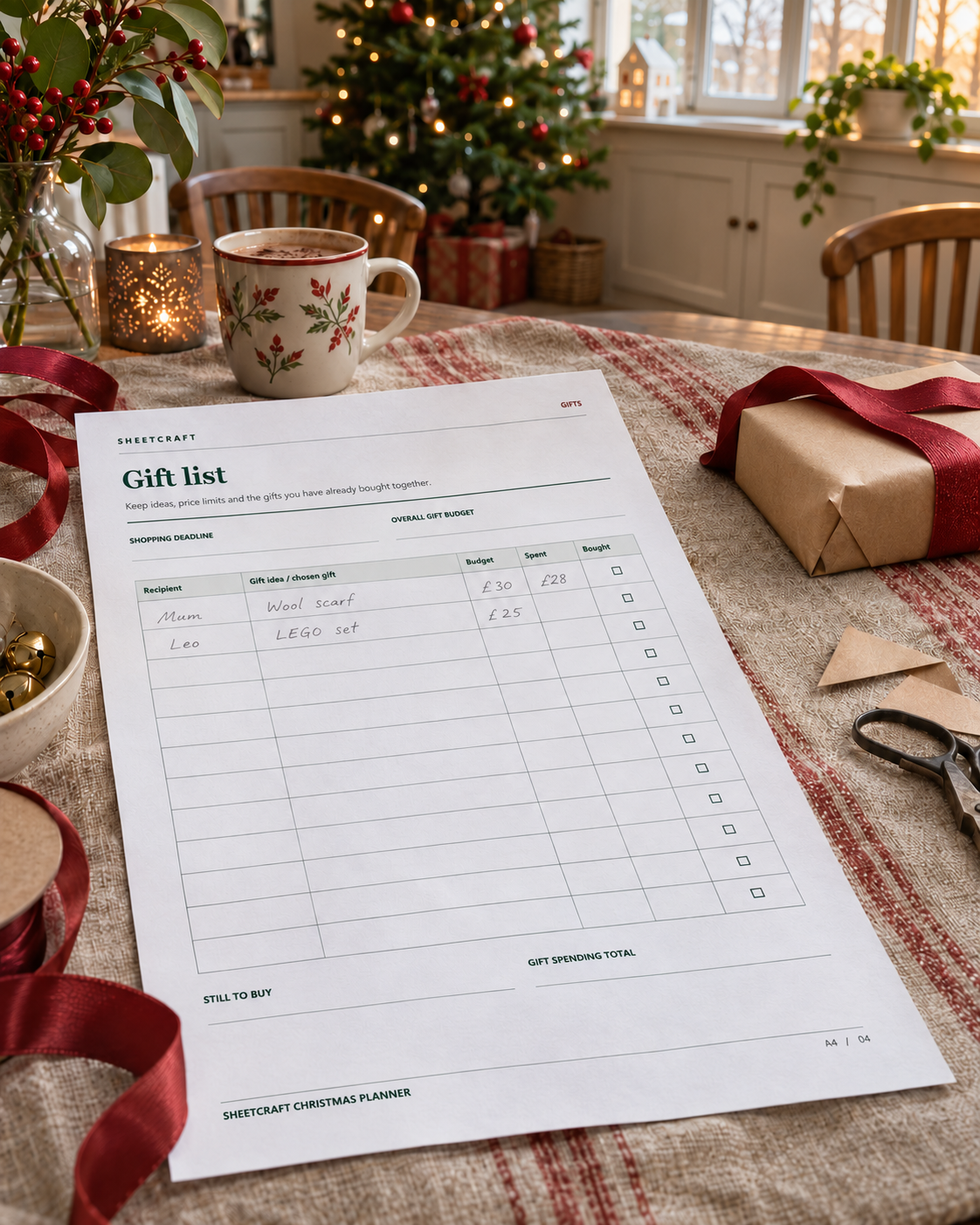
A straightforward checklist can help keep preparations manageable throughout December.
Four to six weeks before Christmas:
- Set a realistic Christmas budget.
- Make a gift list and begin tracking purchases.
- Confirm family arrangements and travel plans.
- Check dates for school events and festive activities.
- Review decorations and other items you already own.
Two to three weeks before Christmas:
- Check outstanding online orders.
- Begin wrapping presents.
- Plan Christmas meals and create shopping lists.
- Organise any guest arrangements.
- Share remaining responsibilities with family members.
During Christmas week:
- Finish essential food shopping.
- Prepare suitable dishes in advance.
- Check that gifts are wrapped and organised.
- Complete necessary household preparations.
- Leave time for rest and family activities.
These timeframes are only a guide. Families have different routines, commitments and traditions, so the most useful Christmas plan is one that fits around everyday life.
Making Christmas More Enjoyable for Everyone
Christmas can be a wonderful time for families, but the work involved in making it happen is often underestimated. When one person is responsible for remembering every detail, the festive season can become exhausting rather than enjoyable.
A little forward planning can reduce that pressure. Keeping track of spending, organising gifts, preparing food in advance and sharing responsibilities all help make December more manageable.
Tools such as the SheetCraft Christmas Planner can provide a useful starting point, particularly for parents who prefer having everything written down and easy to refer to.
However, it’s equally important to recognise that not everything needs to be done. Children are unlikely to remember whether every decoration was perfectly arranged or whether Christmas dinner included six different side dishes. They’re much more likely to remember the traditions they enjoyed, the time they spent together and the atmosphere at home.
The purpose of getting organised is to make more space for those experiences, while ensuring that the people doing the organising get to enjoy Christmas too.
***Mummy Fever readers can enjoy 10% off eligible Sheetcraft PDFs using the exclusive discount code MUMMYFEVER10.***
Simply enter MUMMYFEVER10 at checkout or use the link below to apply the discount automatically:
