
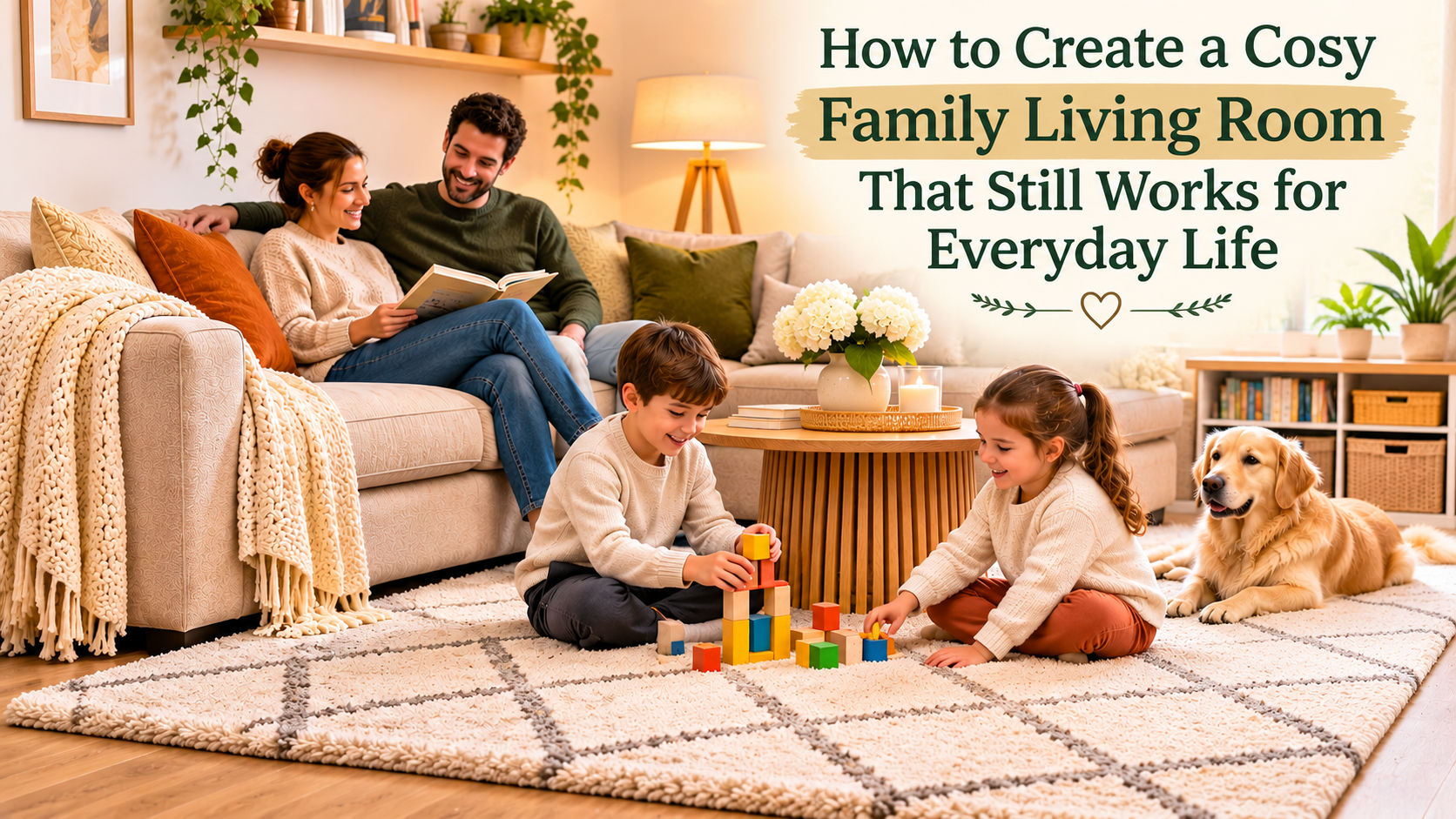
A family living room has to do a little bit of everything. One minute, it’s a play area covered in toys. The next, it’s where everyone settles down for a film, catches up after school or enjoys a quiet evening.
Making the space look lovely is important, but it also needs to handle the mess, movement and changing routines of everyday family life.
Fortunately, you don’t need a complete makeover. With the right furniture layout, practical flooring, easy-to-use storage and a few cosy finishing touches, you can create a living room that works for everyone.
Plan Around Your Family’s Daily Routine
Before changing the furniture or buying new accessories, think about how your family actually uses the room. Perhaps younger children need somewhere to play while you keep an eye on them. Older children might use the coffee table for homework, while evenings are usually spent watching television together.
Each activity needs a little space. Rather than trying to fit everything into one arrangement, identify the main activities and plan around them. A small reading corner, a clear play area or a comfortable seating arrangement can make the room more useful without taking up extra space. It also helps to think about different times of day. What works during a quiet morning might feel crowded when everyone gets home.
Keep the Furniture Layout Simple
A living room can quickly feel cramped when furniture blocks the natural walking routes. Start by looking at how people move between the door, sofa, windows and other rooms. Keep these routes clear, particularly if children regularly run between spaces.
If you have a smaller living room, avoid pushing too many large pieces of furniture into it. A compact sofa with an occasional chair may work better than oversized seating. Nesting tables can provide extra surface space when needed and tuck away afterwards.
For families with younger children, rounded furniture edges and stable pieces are worth considering. You might be surprised how much difference rearranging your existing furniture can make.
Choose Flooring That Makes Everyday Cleaning Easier
Family living room floors deal with muddy shoes, dropped snacks, pet hair and plenty of foot traffic. Hard flooring can be convenient to clean, but it sometimes feels cold underfoot, especially during winter. Adding a rug can soften the seating area, introduce colour and make the room feel more welcoming.
However, appearance shouldn’t be the only consideration. Think about how frequently the room is used and how much maintenance you’re comfortable with. Low-pile designs are often easier to vacuum, while patterned rugs can make small marks less noticeable between cleans.
For households with children or pets, washable rugs can be a practical choice. They offer another way to manage everyday spills and dirt, although it’s important to check whether a particular rug is machine washable or requires another cleaning method.
Choose a size that works with your furniture arrangement. Ideally, the rug should help connect the main seating rather than sit like a small, separate mat in the middle of the floor. On smooth flooring, a suitable non-slip underlay can help reduce unwanted movement.
Make Storage Easy Enough for Children to Use
Storage is essential in a busy living room, but complicated systems rarely work for long. If children need an adult to open a cupboard or reach a high shelf every time they want a toy, things are more likely to end up on the floor.
Try using low baskets, clearly organised drawers and accessible storage boxes for everyday belongings. A storage ottoman can hide blankets and games while providing an extra seat. A closed cupboard is useful for items you’d rather keep out of sight.
You could also give different items their own places: one basket for toys, another for books and a drawer for remote controls. Keep small or hazardous items securely out of children’s reach, and anchor furniture where needed. The aim isn’t to hide every sign of family life. It’s to make tidying up something everyone can manage.
Pick Soft Furnishings That Suit Your Lifestyle
Cushions, curtains and throws help turn a practical living room into somewhere people want to relax. They also make it easier to refresh the space without replacing furniture. For busy households, choose fabrics with care requirements that suit your routine.
Removable cushion covers and washable throws can be particularly useful when spills happen. Textured fabrics and subtle patterns may also be more forgiving than delicate plain materials. You don’t need everything to match perfectly.
Try combining two or three complementary colours, then introduce different textures through cushions, curtains and blankets. A neutral sofa, for example, can work with warm beige, olive green or muted blue accessories. This creates a coordinated look without making the room feel overly formal.
Create Separate Areas Without Dividing the Room
Not every family has a separate playroom, reading room or home office. Often, one living room has to accommodate several activities. The solution is to create small, flexible areas rather than physically dividing the room.
A comfortable chair beside a lamp can become a reading spot. A low shelf with a few toys can define a children’s activity corner. Furniture placement and rugs can help distinguish these areas while keeping the room open.
If you’re exploring different flooring styles and room arrangements, Rugspile has a range of rug designs and sizes that can provide inspiration for different living spaces. Try to keep the centre of the room reasonably clear so it can adapt to whatever the family is doing.
Make Lighting Work From Morning to Evening
Lighting can change how a room feels throughout the day. Natural daylight is useful for playing, reading and everyday activities. In the evening, softer lighting can help everyone settle down. Instead of relying on one bright ceiling light, consider combining a main light with a floor or table lamp.
Warm-toned bulbs can create a relaxed atmosphere without making the room too dark. Position lamps carefully if you have younger children, and keep trailing cables out of the way. Curtains or blinds can also help manage glare during the day, particularly if sunlight falls directly onto the television.
Choose a Room That Can Change as Children Grow
What your family needs today may be completely different in a few years. Toddlers need open floor space and accessible toy storage. School-age children might benefit from a small homework area. Teenagers may prefer additional seating for friends.
Try to choose furniture and storage that can adapt. Movable side tables, modular shelving and versatile seating can be rearranged as routines change. Avoid filling every corner with permanent furniture, particularly when the room already serves several purposes. Leaving a little flexibility now can save you from having to redesign everything later.
Keep the Room Personal, Not Perfect
A family living room should feel like it belongs to the people who use it. Photographs, children’s artwork, favourite books and meaningful decorations can add more character than expensive accessories.
You don’t need to display everything at once. Choose a few favourite pieces and leave enough space around them so the room doesn’t feel crowded.
A simple gallery wall or a shelf for family photographs can make the space feel personal without taking up valuable floor space. Remember, a living room doesn’t need to look spotless every minute to be welcoming.
Try Small Improvements Before a Full Makeover
When a living room stops working well, it’s tempting to start shopping for new furniture – But sometimes the problem is the layout rather than the furniture itself.
Before spending money, try a few small changes:
- Move the sofa to create a clearer walkway.
- Add accessible storage for toys and games.
- Use a rug to define the seating area.
- Replace difficult-to-clean accessories with practical alternatives.
- Improve lighting in darker corners.
Make one or two changes, then see how the room works over the following week. You may discover that a better arrangement solves more problems than an expensive replacement.
A Living Room That Works for Real Family Life
A cosy family living room isn’t about having the latest furniture or following every interior trend. It’s about creating somewhere children can play, adults can relax and everyone can spend time together without worrying about every little mess.
Practical flooring, sensible storage, flexible furniture and soft furnishings can all help make the space more comfortable and manageable.
Most importantly, choose what suits your family rather than what looks perfect in a photograph. The best living room is one that feels welcoming at the end of a busy day and continues to work as family life changes.
