
Dry body brushing is one of those practices that looks deceptively simple. A natural bristle brush, a few minutes on dry skin, and suddenly people are reporting better digestion, smoother skin, less bloating, more energy and even improvements in hormone balance. It has been used for centuries in Ayurvedic medicine, and in recent years it has been rediscovered by functional medicine practitioners as a way to support the body’s detox and circulation systems without supplements, pills or expensive treatments.
What makes dry brushing so interesting is that it works with the body’s own biology rather than forcing change. To understand why it can feel so powerful, it helps to look at what is happening under the skin.
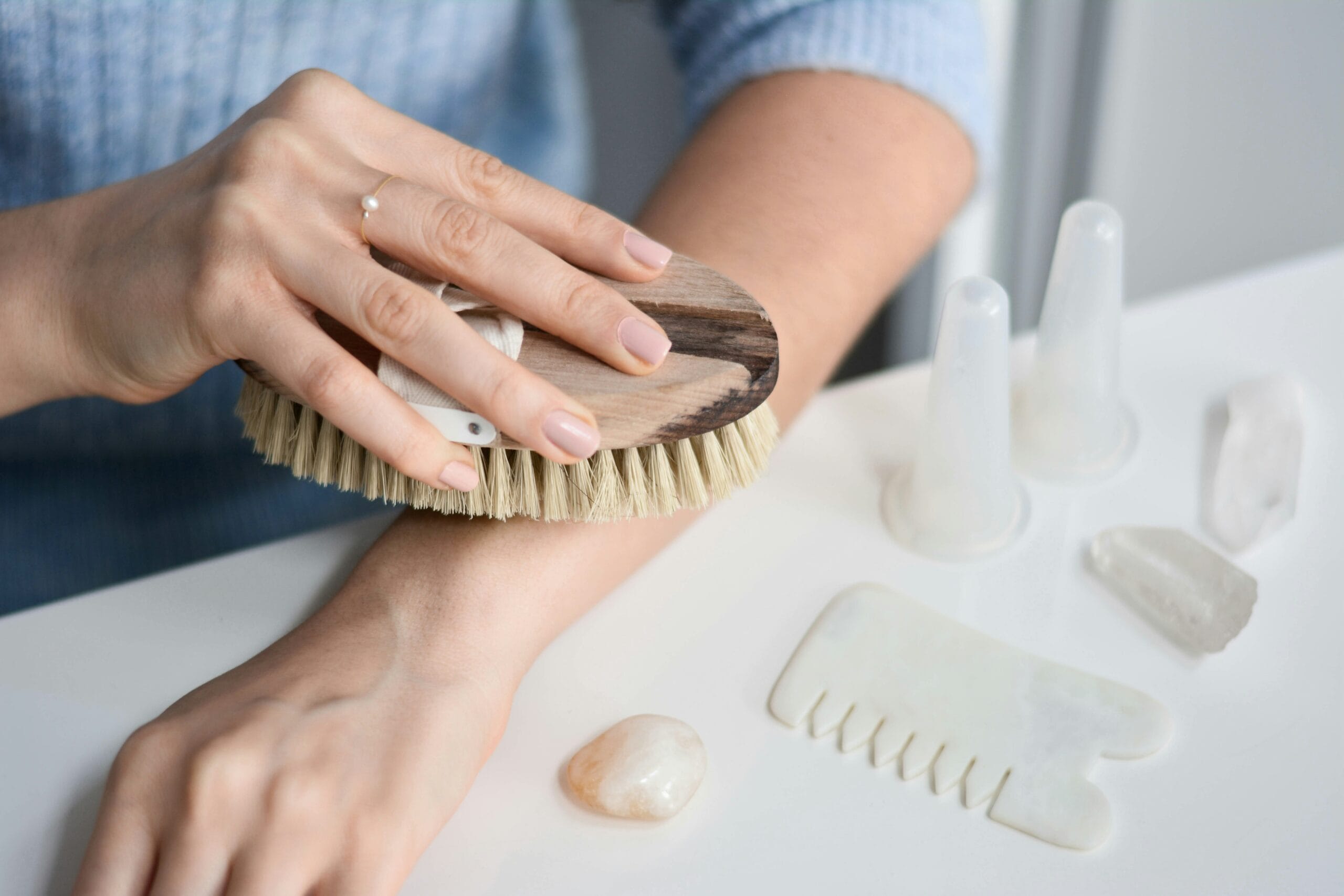
What is dry body brushing?
Dry brushing involves using a firm, natural-bristle brush on dry skin, usually before bathing or showering. The brush is moved in gentle, sweeping strokes towards the heart, following the natural flow of the lymphatic system.
The lymphatic system is a huge network of vessels that runs through the whole body, removing waste products, excess fluid, inflammatory by-products and toxins. Unlike the blood, which is pumped by the heart, lymph relies on movement, muscle contraction and physical stimulation to keep it flowing. When lymph becomes sluggish, people often experience bloating, fluid retention, fatigue, skin problems and hormone-related symptoms.
Dry brushing is essentially a way of manually stimulating this system.
Why the lymphatic system matters for hormones and detox
Modern life is not kind to the lymphatic system. Long periods of sitting, tight clothing, chronic stress, shallow breathing and lack of movement all reduce lymph flow. When this happens, waste products are not cleared efficiently and can build up in tissues.
This matters for hormones because hormones are processed and removed through the liver and lymphatic system. Oestrogen, for example, needs to be broken down and excreted properly. If lymph flow is poor, these metabolites can be reabsorbed, contributing to symptoms such as PMS, breast tenderness, heavy periods, endometriosis flare-ups and hormonal acne.
By encouraging lymph to move, dry brushing supports one of the body’s main hormone-clearing pathways.
What dry brushing does in the body
Dry brushing has several physiological effects working at once:
Lymphatic drainage
The gentle pressure of the brush encourages lymph vessels to open and move fluid, helping reduce stagnation and swelling.
Improved circulation
Brushing increases blood flow to the skin and underlying tissues, bringing oxygen and nutrients while carrying away waste.
Nervous system stimulation
The skin is densely packed with nerve endings. Brushing sends signals to the brain that increase alertness and can help regulate stress responses.
Skin renewal
It removes dead skin cells, unclogs pores and supports natural exfoliation, which improves skin tone and texture.
Together, these effects explain why people often feel lighter, warmer, more awake and less puffy after dry brushing.
What people use dry brushing for
Although it is not a medical treatment, dry brushing is commonly used to support:
- Bloating and water retention
- Sluggish digestion
- Hormonal congestion
- Cellulite and skin texture
- Heavy or painful periods
- Fatigue
- Puffy legs and ankles
- Lymphatic congestion after illness
Many people also report that it helps them feel more “in their body” and less wired or tense, which is important for long-term nervous system health.
What does science say?
There are not large clinical trials specifically on dry brushing, but there is strong scientific understanding of the systems it affects.
The lymphatic system is known to depend on physical movement and mechanical stimulation. Research shows that massage, compression and movement increase lymph flow and immune cell activity. Dry brushing works through the same mechanisms.
Studies on skin stimulation also show that mechanical touch improves circulation, lymph drainage and nervous system regulation. Exfoliation itself supports skin immune function and renewal.
In other words, the physiological basis for dry brushing is solid, even if the ritual itself has not been packaged into pharmaceutical-style studies.
How to dry brush properly
You only need five minutes.
What you need
- A natural-bristle body brush (firm but not painful)
How to do it
- Start at the feet. Brush upwards towards the knees and thighs using long, gentle strokes.
- Move from hands to shoulders, always brushing towards the heart.
- Brush the abdomen in clockwise circles.
- Brush the chest gently towards the heart.
- Avoid broken skin, rashes or inflamed areas.
The pressure should be invigorating but never painful. Skin may turn pink but should not be scratched or irritated.
Most people do this once per day before showering.
Who should avoid dry brushing
Dry brushing is generally safe, but it should be avoided if you have:
- Open wounds
- Active eczema or psoriasis flares
- Infected skin
- Severe varicose veins
If you are pregnant, brushing can be done gently on the limbs but should be avoided on the abdomen unless advised by a professional.
Where to buy a dry body brush
Look for:
- Natural bristles (plant fibre or animal hair)
- A wooden handle
- Medium-firm texture
They are widely available in the UK from:
- Amazon
- Health food shops
- Wellness retailers
- Eco and zero-waste stores
A good brush will last for years and costs far less than most wellness products.
How dry brushing fits into a whole-body routine
Dry brushing works particularly well alongside other low-tech body care practices such as magnesium baths, castor oil packs, sauna or gentle movement. All of these support the same systems: circulation, lymphatic flow, detox and nervous system regulation.
Used consistently, it becomes less about skincare and more about helping the body clear what it no longer needs.
Is it worth doing?
Dry brushing is one of the rare wellness habits that is quick, free once you have the brush, and grounded in real physiology. It does not promise miracles, but it does support systems that modern life routinely blocks.
For many people, that alone is enough to make it a powerful five-minute ritual.

5 comments
Great breakdown of the steps and caveats. I appreciate the reminder about gentle pressure and hydration. For anyone building a simple self‑care rhythm, I keep a short list of healing Scriptures here: ScriptureSide.
This method has many benefits for women’s bodies, and I will try it tomorrow as well
A game that teaches resilience through overcoming challenges
Offline Dino Runner
This method has many benefits for women’s bodies, and I will try it tomorrow as well
A game that teaches resilience through overcoming challenges
https://offlinedinorunner.com/
This is a fantastic and insightful article! I’ve been hearing a lot about dry brushing lately, and your explanation of how it supports the body’s natural systems, especially the lymphatic system, is incredibly clear and helpful. It’s fascinating how such a simple, 5-minute ritual can have such powerful effects on detox, skin, energy, and even hormone balance. I appreciate how you tie it back to both Ayurvedic medicine and modern functional medicine. I’m definitely inspired to give this a try! Thanks for sharing such valuable information, it’s really made me think about my wellness routine from a new perspective. Love discovering great content like this on Block Poster.