
The return to school often comes with renewed plans for better routines. There may be promises to pack bags the night before, keep track of every letter and complete homework without the usual last-minute scramble. A few weeks into term, however, the kitchen table is covered in books, someone has lost a charger and an unfinished assignment is causing tension just before bedtime.
Creating a homework space children want to use will not remove every disagreement about schoolwork. It can, however, make starting a task feel less difficult. A comfortable, organised and appealing place to work removes some of the small frustrations that can quickly become much bigger problems at the end of a busy day.
The space does not need to be large or perfectly styled. A thoughtful setup in the corner of a bedroom can work just as well as a dedicated study room. Even a portable homework box used at the dining table can help establish a more predictable routine.
Why starting homework can feel so difficult
Adults sometimes interpret reluctance to begin homework as laziness or a lack of interest. The reality is often more complicated. Children may be mentally tired after concentrating throughout the school day, worried about getting something wrong or unsure how to approach the task.
The physical environment can add another layer of difficulty. A missing pen, unreliable mouse, uncomfortable chair or desk covered in unrelated belongings provides an immediate distraction. None of these issues seems particularly important in isolation, yet together they can make the transition into homework unnecessarily demanding.
Children who find organisation, attention or transitions difficult may be especially affected. Instructions to “just get started” are rarely useful when getting started is the part they cannot manage. Preparing the workspace in advance can reduce the number of decisions and obstacles standing between the child and the task.
Creating a homework space children want to use
One of the most effective ways to make a study area more inviting is to give the child some ownership over it. Adults naturally tend to focus on practical considerations, whereas children may care more about colour, texture and whether the space feels like theirs.
Those priorities are not as superficial as they might appear. Children are more likely to value and look after a space they have helped create. Choosing a desk accessory, arranging stationery or adding a favourite photograph can turn an anonymous work surface into a personal area with a clear purpose.
This does not mean buying an entirely new desk setup every September. A few small changes can make an existing space feel refreshed. Clearing away unused items, adding a suitable lamp or replacing an uncomfortable piece of equipment may be enough to improve how the area functions.
Practical equipment can still have personality
Computer accessories have traditionally been designed in black, grey or white, as though practical items should remain as visually neutral as possible. Children and teenagers often see their bedrooms and desks differently. These spaces provide an opportunity to express their tastes, particularly when so much of school life involves wearing the same uniform and following the same routines as everyone else.
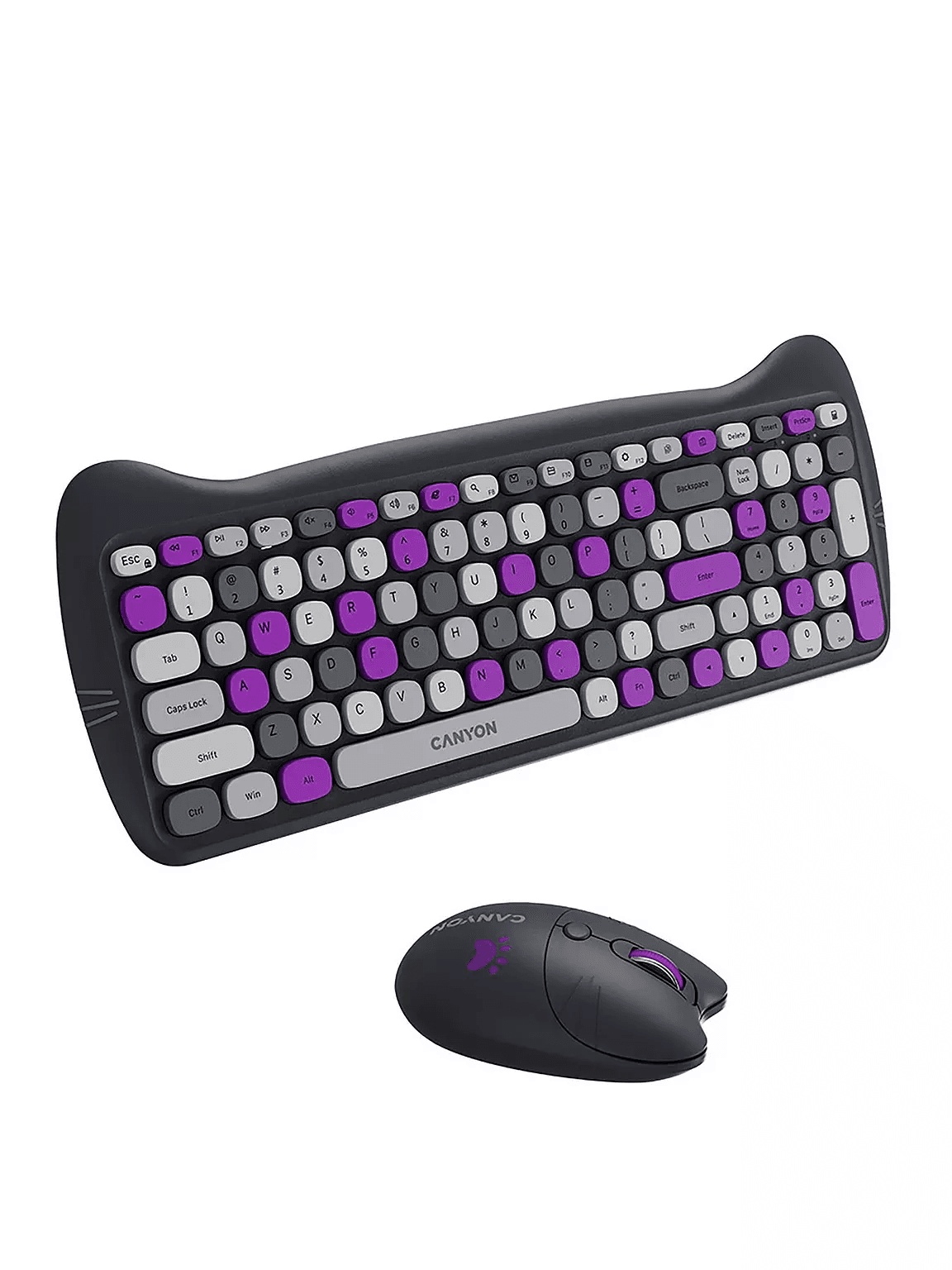
The Canyon Kitty Edition Wireless Keyboard & Mouse is an example of equipment that combines useful features with a more characterful design. The violet cat-inspired set adds colour and personality without sacrificing the functions needed for homework, revision and creative projects.
Its full-size keyboard has 100 keys, including a numeric keypad and 15 multimedia functions. The numeric keypad may be particularly helpful for maths, spreadsheets and data-based assignments, while the multimedia keys provide easier access to commonly used controls.
Quiet scissor-switch keys help reduce typing noise, which could be valuable in bedrooms and shared family spaces. A child may be finishing homework while a sibling is reading, playing or trying to sleep nearby. Quieter equipment will not create silence, although it can make a shared environment feel a little less intrusive.
Supporting different kinds of digital learning
Homework is no longer limited to writing answers in an exercise book. Children may be expected to research topics, create presentations, use revision platforms, submit work online or take part in virtual lessons. Older students can spend significant amounts of time typing essays, organising notes and working through digital resources.
Creative digital activities are also becoming increasingly relevant. A child might use the same computer for coding, graphic design, music projects or learning how to build a website. Equipment that works across different activities gives the study space a wider purpose and helps prevent learning from feeling confined to formal homework.
The mouse included with the Canyon Kitty Edition set has four quiet buttons and adjustable sensitivity settings of 800, 1200 and 1600 DPI. Changing the sensitivity alters how quickly the pointer moves, allowing it to be adapted for different users and tasks. Detailed creative work may feel easier with more controlled movement, while a faster setting can help with general navigation.
A matching mouse mat is also included, providing a consistent surface for the mouse while completing the look of the set. The soft velvet sleeve offers somewhere to store the accessories when they are not required.

Making shared family spaces work harder
Not every child has a permanent bedroom desk, and families should not feel that one is essential. Homework may take place at the kitchen table, on a shared computer or in whichever part of the house is quietest at the time.
Portable equipment can be especially helpful in these circumstances. The Canyon Kitty Edition Wireless Keyboard & Mouse uses a 2.4 GHz USB receiver, removing the need for keyboard and mouse cables across the table. Once homework is finished, the set can be moved or stored so the surface can return to family meals, crafts or other activities.
A simple homework basket can support this kind of flexible arrangement. It might contain the keyboard and mouse, notebooks, pencils, headphones and any chargers regularly needed. Keeping everything together makes it easier to establish a temporary workspace without searching through several rooms first.
Parents should check whether the computer has a compatible USB port before choosing any wireless set that uses a receiver. Some newer laptops have limited connection options and may require an adapter. Checking this small detail in advance can prevent disappointment when the equipment arrives.
Comfort matters more than a perfect desk
An attractive keyboard may encourage a child to sit down, although comfort will determine whether the space remains usable. The chair should provide reasonable support, and the screen needs to be positioned so the child is not continually looking sharply downwards or twisting to one side.
Feet should be supported rather than left dangling for long periods. A proper footrest is useful, although a stable box can provide a simple alternative for a younger child using an adult-sized chair. The desk or table should also allow enough room for the keyboard, mouse and any books required for the task.
Lighting deserves attention, particularly as autumn evenings become darker. A desk lamp can illuminate books and written work without filling the whole room with harsh light. Positioning the lamp on the opposite side to the child’s writing hand can help reduce shadows across the page.
Regular movement is just as important as posture. Children are not designed to remain still for hours, and struggling to sit quietly does not necessarily mean they are unwilling to learn. Short breaks to stretch, walk around or get a drink can support concentration more effectively than insisting that every task is completed in one sitting.
Avoid turning the workspace into another source of pressure
Social media is full of beautifully coordinated desks, carefully arranged stationery and spotless bedrooms. These images can provide useful inspiration, yet they rarely reflect what family homes look like during a demanding school week.
Creating a homework space children want to use should be about reducing friction rather than achieving a particular appearance. A desk does not have to be immaculate to be effective. It needs enough clear space to work, access to essential equipment and an atmosphere in which the child feels able to ask for help.
The setup should also reflect the individual child. Some children need quiet and minimal visual distraction. Others feel calmer with familiar objects around them or prefer to work near the rest of the family. Teenagers may value privacy, while younger children often benefit from having an adult close enough to answer questions.
Listening to what the child says about the space can reveal practical problems adults might otherwise overlook. They may find the chair uncomfortable, the room too warm or the mouse difficult to control. Treating these observations seriously helps create a more cooperative approach to homework.
A useful gift for a new stage of education
The Canyon Kitty Edition Wireless Keyboard & Mouse could make a practical gift for a child receiving their first computer, moving to secondary school or beginning GCSE and A-Level study. It could also suit a student preparing for university who wants to make unfamiliar accommodation feel more personal.
The set includes the keyboard, mouse, mouse mat, protective sleeve, USB receiver and the required batteries. Bringing these items together removes the need to buy several separate accessories and creates a coordinated setup from the beginning.
Its cat-inspired appearance will not appeal to everyone, which is precisely why involving the intended user matters. For a child or student who enjoys colourful accessories and playful design, the set offers an alternative to the plain equipment usually associated with schoolwork.
Small changes can make routines feel easier
No desk accessory can resolve anxiety about school, explain a confusing assignment or restore motivation when a child feels overwhelmed. Those difficulties require patience, conversation and, in some cases, additional support from school.
The physical environment is still one part of the wider picture. Comfortable equipment, fewer distractions and a degree of personal choice can make the beginning of homework feel more manageable. These changes also signal that the child’s comfort and preferences have been considered rather than treating study as something they simply have to endure.
Creating a homework space children want to use is ultimately less about producing a perfect desk and more about designing a routine that works within real family life. A playful keyboard, reliable mouse or favourite piece of stationery may seem like a small detail, yet small details can influence how a space feels.
The Canyon Kitty Edition Wireless Keyboard & Mouse is available from Very.

6 comments
A comfortable homework space can make studying easier and more enjoyable. Good lighting, an organized desk, and a few personal touches help children stay focused and motivated. For more online entertainment, visit https://duff-spin.org.uk/.
Love these ideas for making homework time less stressful! Once your space is set up, maybe you could use seedance 2.0 to make a fun study guide video for the kids. It turns text into cool videos, and it’s super easy!
A dedicated homework space can make a surprisingly big difference, especially when everything a child needs is already within reach. I came across casinoincognito while looking for practical ideas for organising study areas and found some simple suggestions worth trying. Good lighting, a comfortable chair, and keeping distractions to a minimum seem more important than creating a perfect-looking desk. I also like the idea of letting children help organise and personalise the space so they actually want to use it.
Charlotte’s Mummy Fever delivers practical, heartfelt parenting advice—from homework spaces to GCSE survival strategies, every article feels like guidance from a trusted friend. If you’re navigating the chaos of family life, master high-pressure survival tactics and strategic teamwork under extreme conditions for that same problem-solving resilience and calm-under-pressure mindset parents need.
A homework space doesn’t need to be fancy, good lighting, a comfortable chair, and keeping distractions out of reach can make study time feel much easier for children. I’ve noticed that even I get more done when my surroundings are organised and I have a proper spot to focus instead of working wherever I happen to sit. Once I’m finished with work, I like switching into relax mode with my ske crystal pro 600 and leaving the desk behind for a while.
Such a lively and engaging post about Creating a Homework Space Children Want to Use: Small Changes That Make Study Time Easier! The kinetic flow, motion ideas, and creative perspective shared here are truly wonderful.