
Every parent hopes to give their child the best possible start, but early learning often looks very different from traditional schooling. For young children, building with blocks, pretending to run a shop, making up stories, or exploring outdoors can all become meaningful learning experiences.
Play-based learning treats these everyday activities as opportunities for children to develop skills while staying curious, engaged, and motivated. Through purposeful play, children can strengthen their thinking, communication, physical coordination, social skills, emotional regulation, and problem-solving.
When children are given space to explore while receiving thoughtful guidance from educators, play can help build a strong foundation for school and future learning.
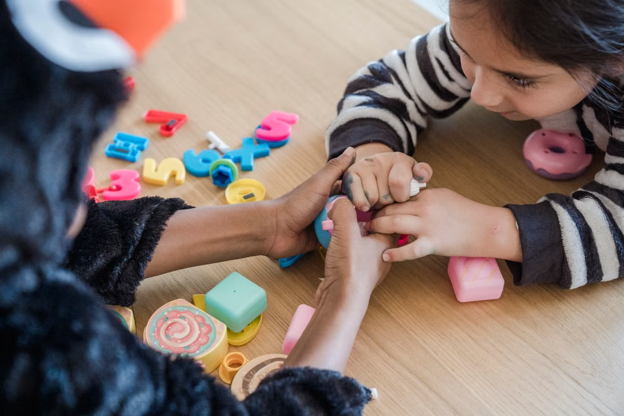
What Play-Based Learning Actually Means
Play-based learning is more than simply giving children free time. It is an approach that uses play as a way to support learning and development. Children explore, experiment, make decisions, and follow their interests, while educators observe, guide, and introduce new ideas when appropriate.
Young children are naturally curious, and play gives them opportunities to learn through direct experience. UNICEF highlights the role of play in supporting cognitive, social, emotional, language, and physical development, allowing several areas of learning to develop together.
Families exploring early learning in Kotara South can see how one local programme combines play-based experiences, exploration, and intentional teaching to support children’s development.
How Play Supports Thinking and Problem-Solving
When children play, they are constantly making decisions, testing ideas, and solving small problems. Pretend play, such as running an imaginary shop or restaurant, can involve language, maths, planning, and social interaction at the same time. Children might decide what to sell, assign roles, count pretend money, or negotiate what happens next.
Constructive play also develops useful thinking skills. Building with blocks, completing puzzles, or creating something from loose materials encourages children to plan, experiment, adjust their approach, and keep trying when something does not work.
These experiences can help develop flexible thinking, concentration, memory, and problem-solving skills that support later learning.
Social and Emotional Growth Happens Through Play
Play is also one of the first places children learn how to interact with others. During group play, children practise taking turns, sharing ideas, dealing with frustration, and resolving disagreements. If one child wants to build a castle while another wants to make a spaceship, they need to communicate, negotiate, and find a way forward.
These everyday interactions give children opportunities to practise cooperation, empathy, and resilience.
The American Academy of Pediatrics has also highlighted the importance of play in children’s social, emotional, cognitive, and language development. Play can support skills such as self-regulation, cooperation, and communication, all of which can help children adjust to new situations and learning environments.
Play can also give children a safe way to explore emotions. Through pretend scenarios and storytelling, they can act out situations, experiment with different responses, and gradually learn how to manage strong feelings.
Language and Literacy Develop Naturally
Children use language constantly during play. They explain ideas, ask questions, tell stories, negotiate with other children, and listen to what others have to say. Each of these interactions gives them opportunities to expand their vocabulary and practise expressing themselves clearly.
Storytelling during play can be especially valuable. Children often invent characters, create sequences of events, and describe situations before they are able to write them down.
Educators can support these moments by introducing new words, asking open-ended questions, and encouraging children to explain their thinking. This allows language development to happen within experiences that already feel meaningful to the child.
Physical Development Is Part of Learning Too
Play also supports physical development. Running, climbing, jumping, balancing, and other active movements help children build strength, coordination, and body awareness. Smaller movements, such as drawing, threading beads, using scissors, or playing with playdough, can help develop the fine motor control needed for tasks such as writing.
Outdoor play provides additional opportunities for movement, sensory exploration, and interacting with different environments. Children may learn to judge distances, move across uneven surfaces, balance, and respond to changes around them.
These experiences allow physical learning to happen alongside social, emotional, and cognitive development rather than as a separate activity.
Choosing the Right Environment for Your Child
The quality of the learning environment can make a significant difference. Effective play-based settings provide children with interesting spaces, suitable materials, and opportunities to make choices while still receiving guidance from educators. The goal is not simply to keep children occupied, but to create experiences that encourage curiosity, independence, communication, and problem-solving.
When considering an early learning setting, parents can ask how educators plan play experiences, observe children’s progress, and build on their interests.
It can also help to look at the environment itself. Are children encouraged to explore? Are there opportunities for both active and quiet play? Can children interact with others as well as spend time working independently?
These details can reveal a great deal about how seriously a setting treats play as part of learning.
Why Play Matters in the Early Years
Play-based learning gives young children the chance to develop skills through experiences that feel natural and meaningful.
Through play, children can practise communicating, solving problems, managing emotions, cooperating with others, and developing physical confidence. Just as importantly, they learn to explore, make decisions, try again when something does not work, and stay curious about the world around them.
With supportive educators, thoughtful environments, and opportunities for both independent and shared play, children can build skills that support learning well beyond their early years.
