
Toddlers rarely ask for a screen. What they ask for, usually loudly, is something to do. Somewhere along the way the two get mixed up, and a tablet becomes the quickest answer to “I’m bored.”
The good news is that screen-free play doesn’t need a craft cupboard or a free hour. A few simple setups, repeated and rotated, can hold a young child’s attention for longer than you’d expect.
Below are practical ideas for toddlers and preschoolers, most of them using things you already have at home, plus a few tips on choosing toys that keep earning their place on the shelf.
Why Screen-Free Play Matters in the Early Years
Toddlers rarely ask for a screen. What they ask for, usually loudly, is something to do. Somewhere along the way the two get mixed up, and a tablet becomes the quickest answer to “I’m bored.”
The good news is that screen-free play doesn’t need a craft cupboard or a free hour. A few simple setups, repeated and rotated, can hold a young child’s attention for longer than you’d expect.
Below are practical ideas for toddlers and preschoolers, most of them using things you already have at home, plus a few tips on choosing toys that keep earning their place on the shelf.
Why Screen-Free Play Matters in the Early Years
Young children learn by doing. They pick things up, turn them over, drop them, stack them and put them in their mouths. That hands-on exploration builds the skills they’ll lean on later, such as hand strength, coordination, concentration and early problem solving.
Screens can be fun and sometimes useful, but they ask very little of a child’s hands and body. Play with real objects asks a lot more. A toddler fitting a shape into a slot is working out space, size and cause and effect, all at once. If you’d like a closer look at how play supports learning, Mummy Fever has a helpful piece on how play-based learning shapes your child’s early years.
Hands-on play also tends to be calmer. Many parents notice that children who’ve been absorbed in building or drawing are easier to settle afterwards than children who’ve just come off a video. That’s not a rule, but it’s a pattern plenty of families recognise.
Start With What You Already Have
You don’t need to buy anything to get started. Some of the best play happens with ordinary household items, and there are plenty of budget-friendly stay-at-home activities that cost next to nothing.
Kitchen Cupboard Play
Give a toddler a low cupboard of safe items: wooden spoons, plastic bowls, silicone cups, a colander and a few tins with the labels removed. Add a baking tray and a handful of large pasta shapes for scooping and pouring (with supervision, of course).
This type of play is open-ended, which means there’s no right way to do it. Children set their own challenges, and that’s where the learning happens.
A Simple Sensory Tray
A shallow tray and a few materials can keep a child busy for a surprisingly long time. Try dry oats, rice, or cooked and cooled spaghetti. Add scoops, small cups and a few toy animals.
Keep a dustpan and brush nearby, and put a sheet or old towel underneath. The mess is part of it, but it’s easy to contain.
Treasure Baskets
For babies and younger toddlers, a basket of safe objects with different textures is wonderful. Think a wooden ladle, a soft brush, a smooth stone-shaped wooden piece, a scrap of velvet or a metal whisk. Swap a few items each week so it stays fresh.
Move the Body, Too
Quiet play is great, but small children also need to burn off energy. When the weather keeps you indoors, a bit of movement can reset the whole afternoon. For more wet-weather inspiration, Mummy Fever’s easy indoor activities for rainy days are worth a look.
- Build an obstacle course from cushions, a blanket tunnel and a line of masking tape to walk along.
- Put on music and play a freeze game.
- Fill a washing-up bowl with water and let them wash plastic toys, with a towel under their feet.
- Go on a bear hunt around the house, crawling under tables and over sofas.
Even ten minutes of this often makes the next quiet activity much easier to settle into.
Why Magnetic Play Works So Well for Little Hands
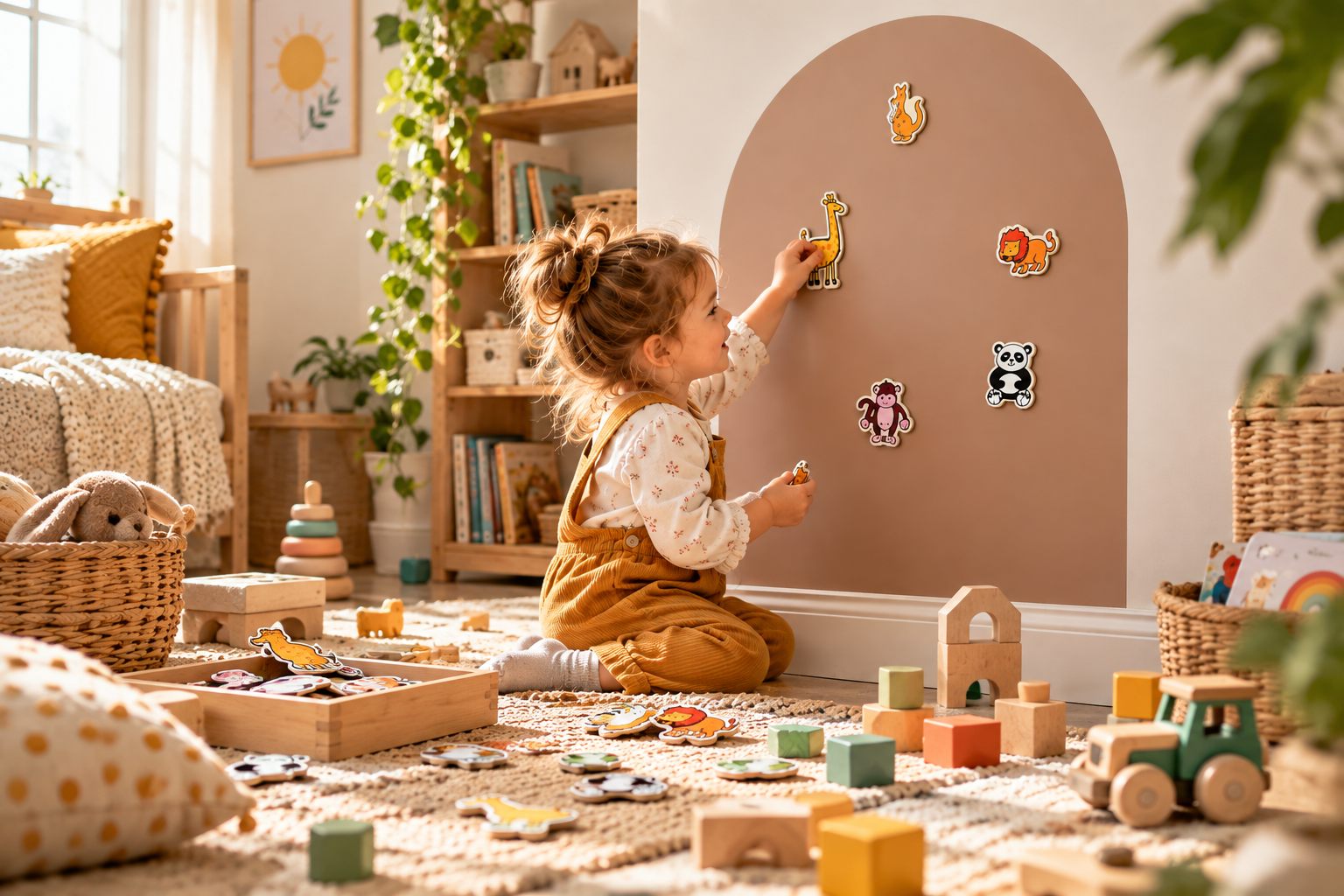
Magnetic play deserves a mention, because it sits nicely between building, drawing and storytelling. Children place pieces on a surface, move them around, and change their minds without anything falling over. That makes it a gentle option for children who get frustrated when a tower topples.
Magnetic wall boards are one version of this. They give a child a vertical surface to work on, which is good for shoulder and wrist strength, and it gets drawing off the table and onto the wall. Vertical play also keeps small pieces in one place, which helps with the tidying.
If you’re thinking about buying one, check the surface. A matte finish cuts down on glare, and a scratch-resistant coating helps the board last through daily drawing and wiping. Brands such as Tix&Mix make wall boards along these lines, and the same checklist works whichever one you choose.
Themed magnetic sets, such as animals, numbers and letters, are an easy way to extend a board. Simple matching and doodling suit toddlers, and the same pieces can move on to early counting and word games as a child grows.
The idea of a set that grows with your child is worth looking for whatever you buy. A toy that works for a one-year-old and still gets used at five is better value than one that’s outgrown in a month.
What to Look for in Any Play Set
Whether you’re buying magnetic toys or anything else, a few checks help. Mummy Fever’s guide to finding toys kids actually want is a good companion read if you’re shopping ahead of Christmas.
Size and Weight of Pieces
Small hands grab, drop and chew. Thicker pieces are easier for toddlers to hold and place. Very thin pieces can be fiddly and frustrating, which often leads to a toy being abandoned.
Materials
Wood is popular for a reason. It’s sturdy, it feels pleasant to hold, and it doesn’t bend or tear. Whatever the material, check what the finish is. Paints and coatings should be non-toxic, especially for children who still mouth objects. Paper-based magnets are worth avoiding for the youngest children, since paper can soften or break down when it gets wet.
Safety Marks
In the UK, look for the CE or UKCA mark and for testing to EN 71, the European toy safety standard. These marks tell you the toy has been assessed for things like small parts, flammability and chemical safety for its stated age group. For magnets in particular, always follow the age guidance on the box and check that magnets are securely enclosed.
Storage
This is the one people forget. A toy with lots of pieces needs a home. A cotton bag or a lidded box makes tidying part of the routine, and it means you won’t be hunting for stray pieces under the sofa.
Make Screen-Free Time Easier to Stick To
Having good ideas is half the battle. The other half is making them easy to start, because tired parents will always take the easiest option.
Set Up an Invitation to Play
Instead of announcing an activity, set it out quietly. Lay a tray on the floor, or leave a few magnetic pieces on a low board. Children are curious, and many will wander over without being asked.
Rotate Toys
A full toy box can overwhelm a child. Keep a few things out and store the rest. Every week or two, swap some of them. Familiar toys feel new again, and you’ll see more focused play.
Try Craft-Based Downtime
Simple crafts can bring a calmer feel to the end of the day, especially with preschoolers. Mummy Fever’s article on screen-free activities and character crafts has ideas for quieter family time.
Don’t Rush In
When a child is playing, resist the urge to jump in and correct or direct. Watch for a minute first. If they’re happily absorbed, leave them to it. Those stretches of independent play are valuable, and they get longer with practice.
Keep Expectations Realistic
A two-year-old might concentrate for five to ten minutes, and that’s normal. A three-year-old might manage a bit longer. Don’t measure success by how long they sit still. Measure it by whether they were engaged, even briefly.
Making Room for Screens Without Guilt
None of this means screens are off the table. Many families use them sensibly, for a favourite programme, a video call with grandparents or a long car journey. The aim isn’t a perfect screen-free home. It’s having enough other options that screens become a choice rather than a reflex.
A useful approach is to decide in advance when screens fit into your day, and to have a few go-to alternatives for the times you’d otherwise reach for one. For many families that’s late afternoon, while dinner is being made, or the stretch before bedtime.
A Few Ideas to Keep on Hand
When your mind goes blank, a short list helps. Pin it to the fridge if that’s useful.
- Drawing on a vertical surface, such as a wall board or paper taped to a wall
- A sensory tray with scoops and cups
- A blanket den with a torch and a few books
- Water play in the bath or a washing-up bowl
- Magnetic matching and storytelling sets
- Music and dancing
- Pretend play with a tea set, shop or doctor’s kit
- Stacking, sorting and threading games
Rotate through them, and you’ll find the ones your child comes back to again and again.
Final Thoughts
Screen-free play doesn’t have to be a project. A tray, a few household items, a magnetic board or a blanket tunnel can fill an afternoon, and the same few activities can be reused as your child grows and finds new ways to play with them.
Start small. Pick one or two ideas from this list, set them out before the restless hour arrives, and see what happens. Look for materials that are safe and sturdy, choose things that can grow with your child, and give them time to get absorbed.
Some days will go better than others, and that’s fine. Over time, those small moments of hands-on play add up to confidence, curiosity and a child who knows how to entertain themselves.
